Honest Reviews · Practical Tutorials

Stop guessing. Start knowing.

In-depth AI tool reviews backed by real testing. We rate every tool across 5 dimensions — so you can pick the right one in minutes, not days.

Latest

Last updated: June 2026. All reviews based on hands-on testing. See our methodology →

758 articles
pcb-skill Review 2026 — The Agent Skill That Takes a Hardware Idea to a Manufacturable PCB, With Gates Instead of Hope
Hardware 7.2/10 Review ·

pcb-skill Review 2026 — The Agent Skill That Takes a Hardware Idea to a Manufacturable PCB, With Gates Instead of Hope

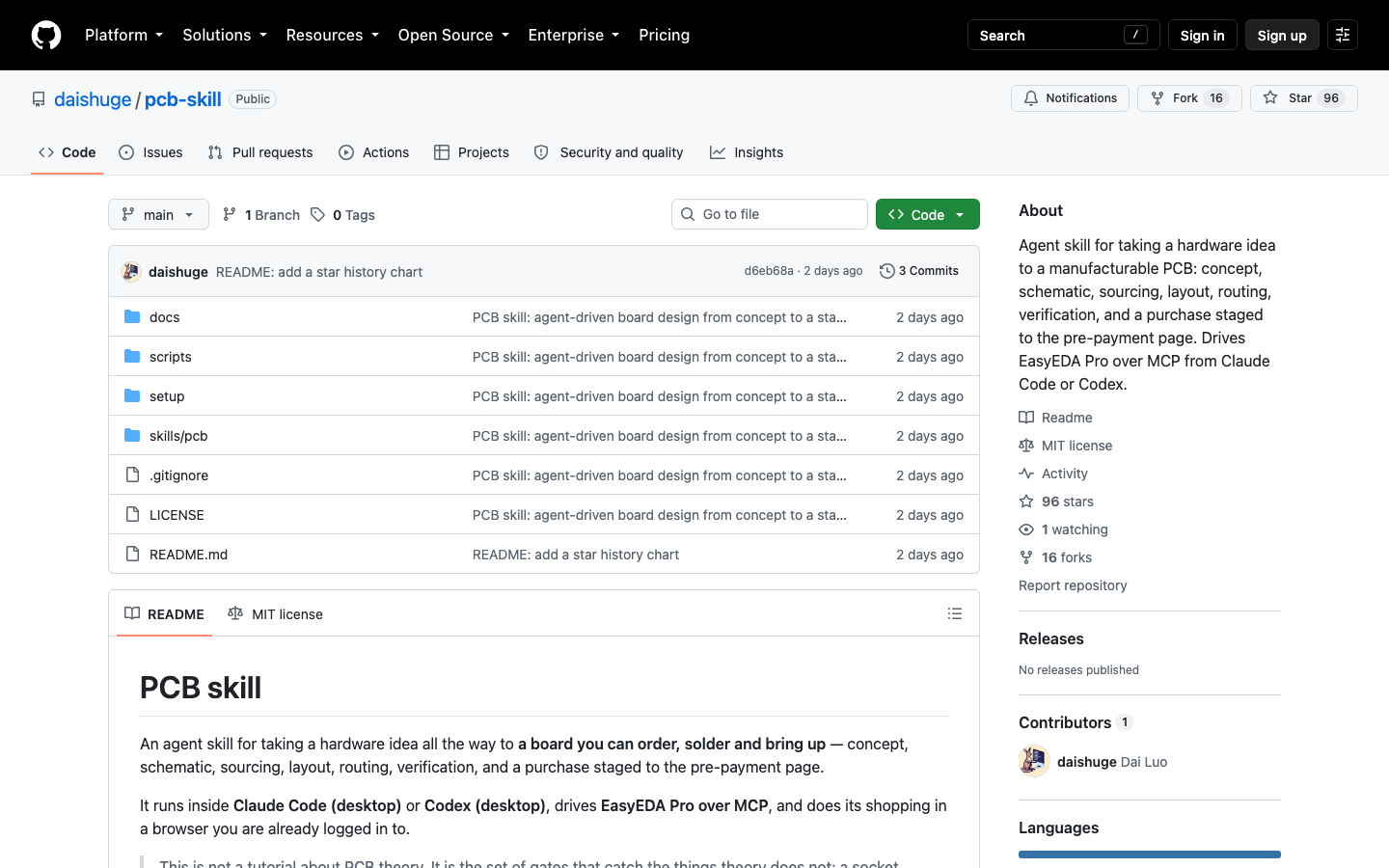
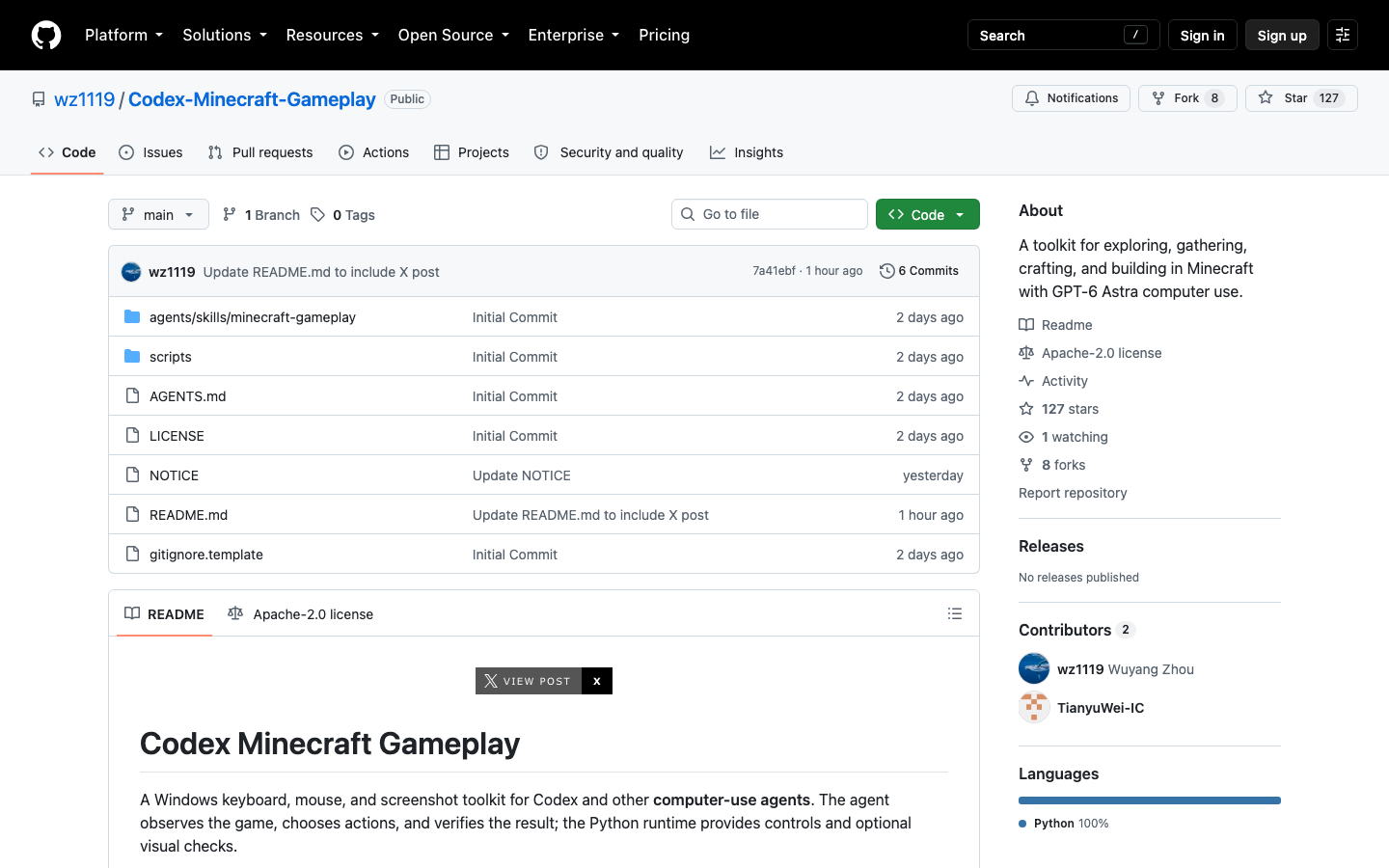
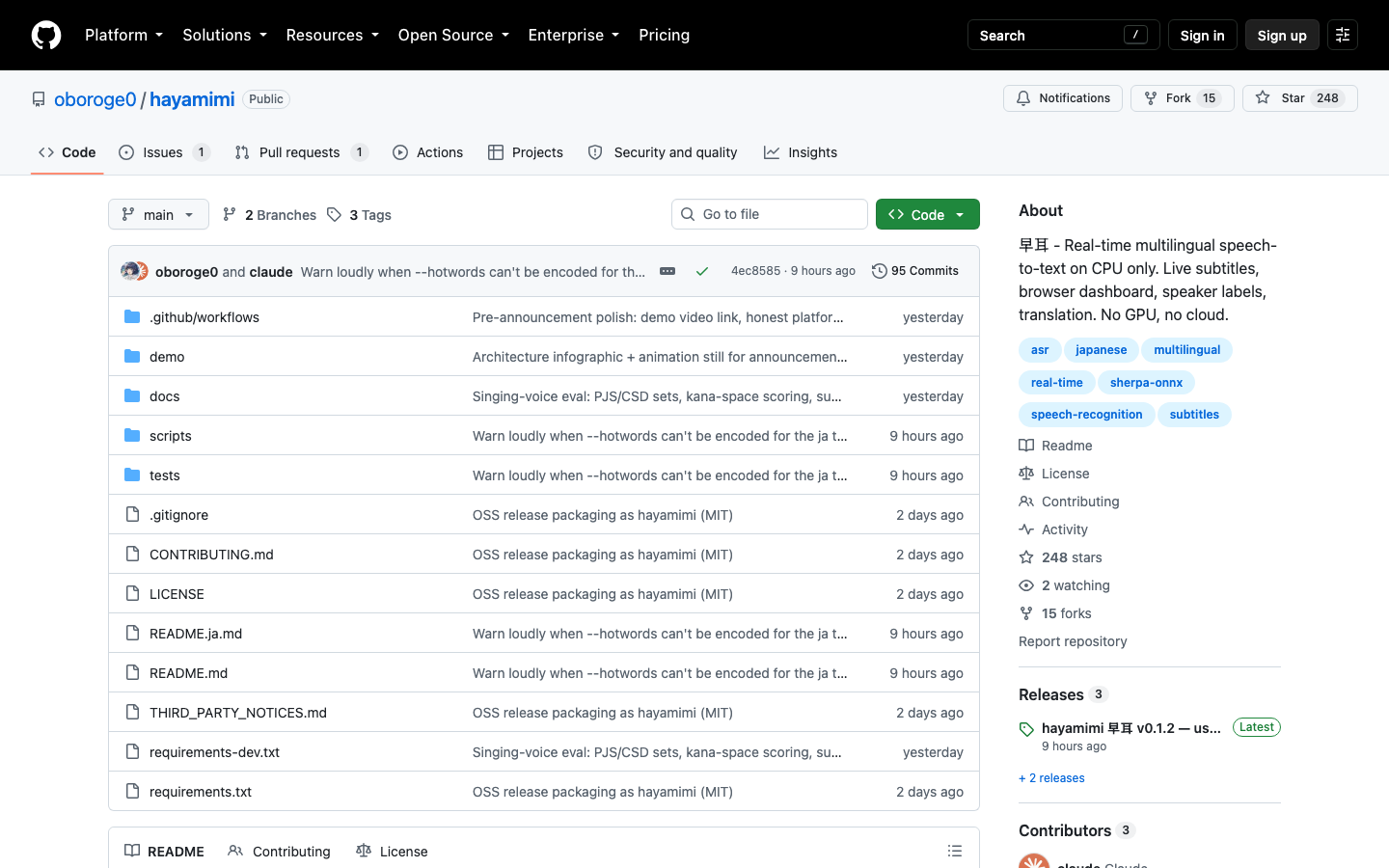
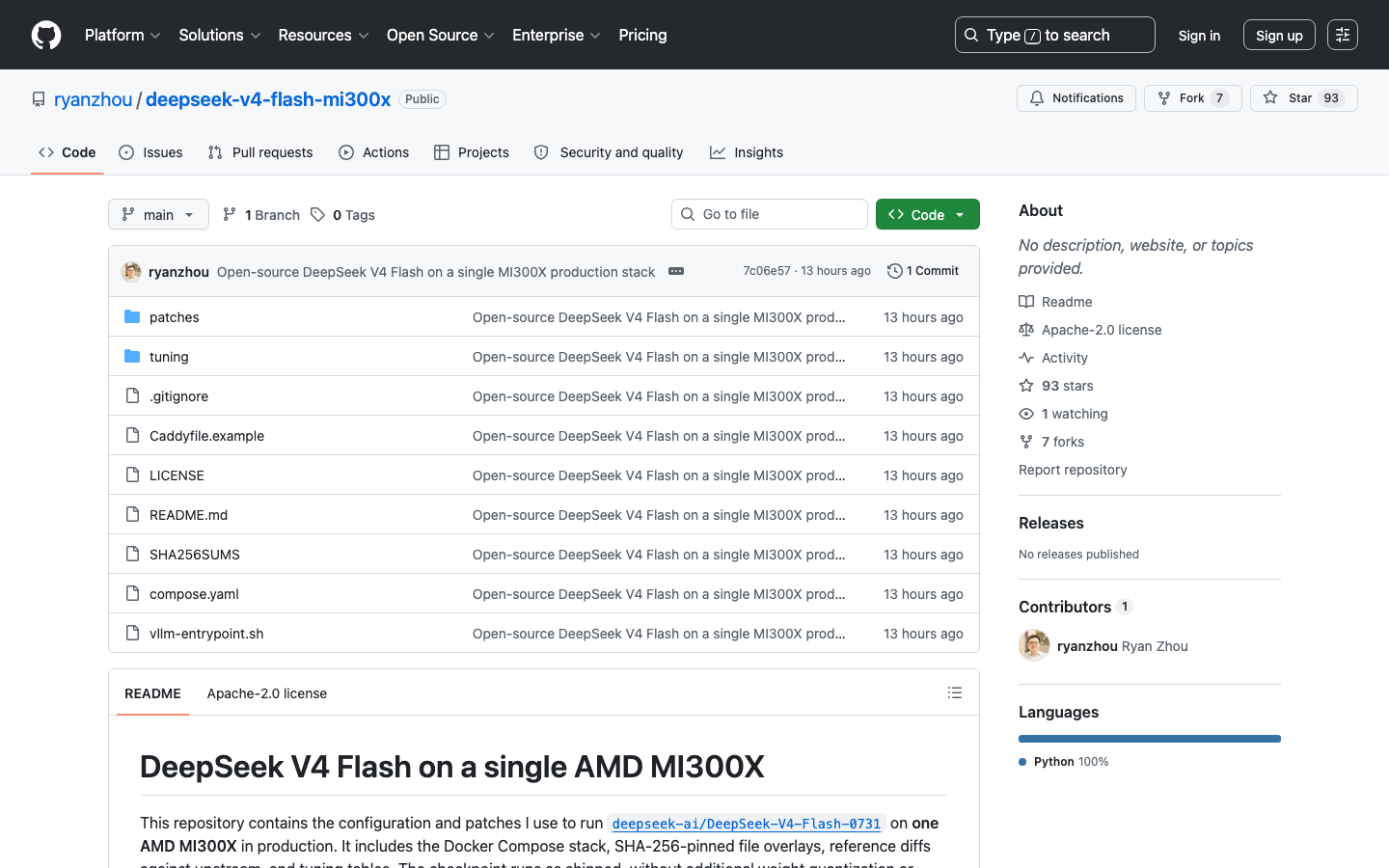
pcb-skill (created September 8, 2026, MIT, ~100 stars in two days) is an agent skill by daishuge that takes a hardware idea all the way to a board you can order, solder and bring up — concept, schematic, sourcing, layout, routing, verification, and a purchase staged at the pre-payment page. It runs inside Claude Code or Codex on the desktop, drives EasyEDA Pro over MCP, and does its shopping in a browser you are already logged in to. The skill is written from one real project: a 41.40 x 100.00 mm four-layer programmable music player with 149 components, 108 routed nets and 100% hand-soldered assembly, released to fabrication with 0 DRC clearance errors and 0 connection errors. This review covers the four gated phases (concept, schematic plus sourcing, layout plus routing, fabrication plus purchase), the adversarial one-pass review that ends every phase, the deliberately EDA-independent verification scripts (Gerber parsing, clearance sweeps, drill census, netlist assertions, 3D interference), the four rules that did the work — including the 10-hour-53-minute silent run that taught the author to make every wait condition answer 'if this crashed right now, would my filter emit a line?' — and the honest caveats: the case-study board is released to fabrication but not yet assembled or powered on, and every defect caught so far is a design-stage catch verified against Gerbers and 3D solids, not a physical failure.

whiteboard-animator Review 2026 — The CPU-Only Render Engine That Turns a Static Whiteboard Image Into a Hand-Drawn Video
Video 7.4/10 Review ·

whiteboard-animator Review 2026 — The CPU-Only Render Engine That Turns a Static Whiteboard Image Into a Hand-Drawn Video

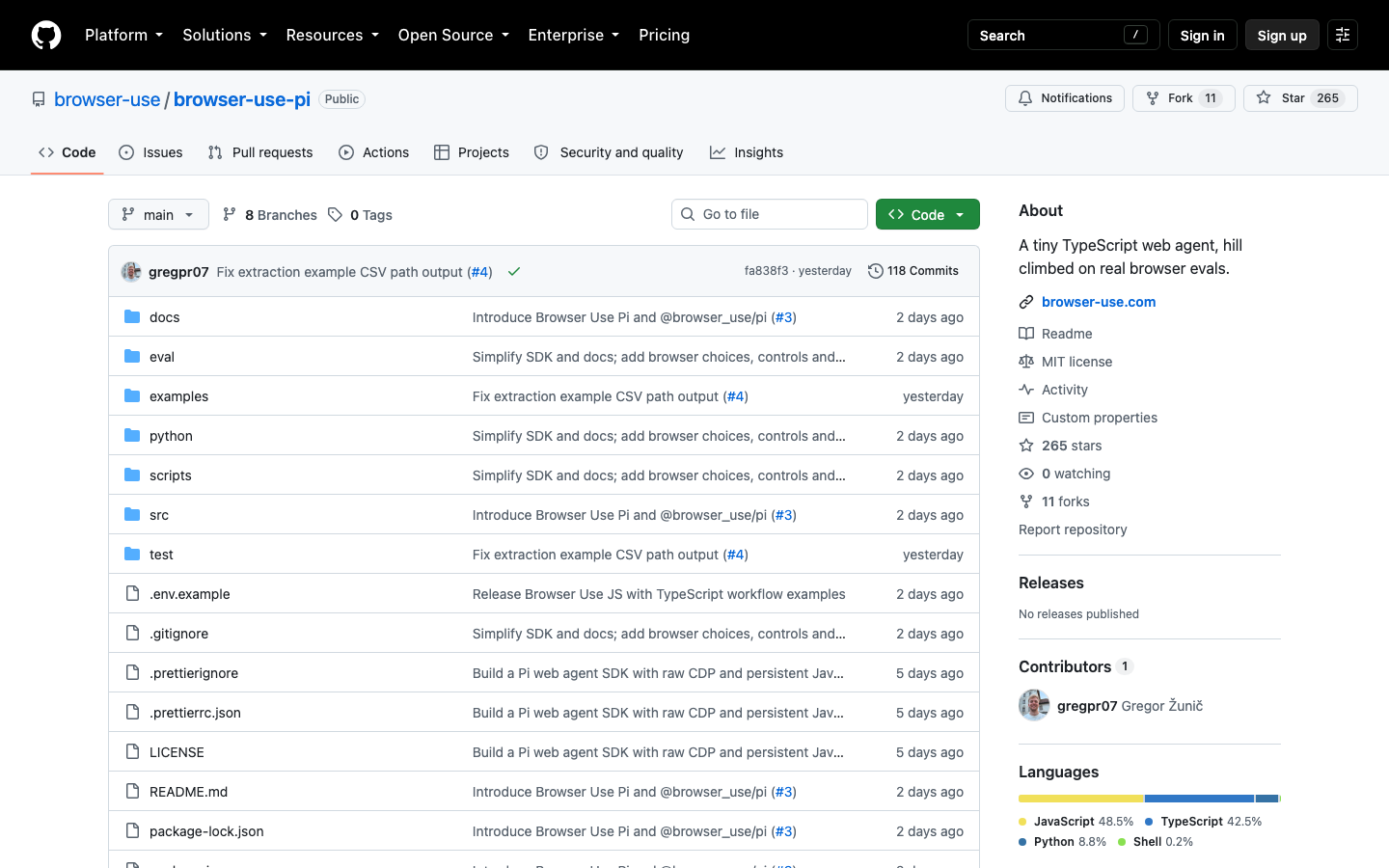
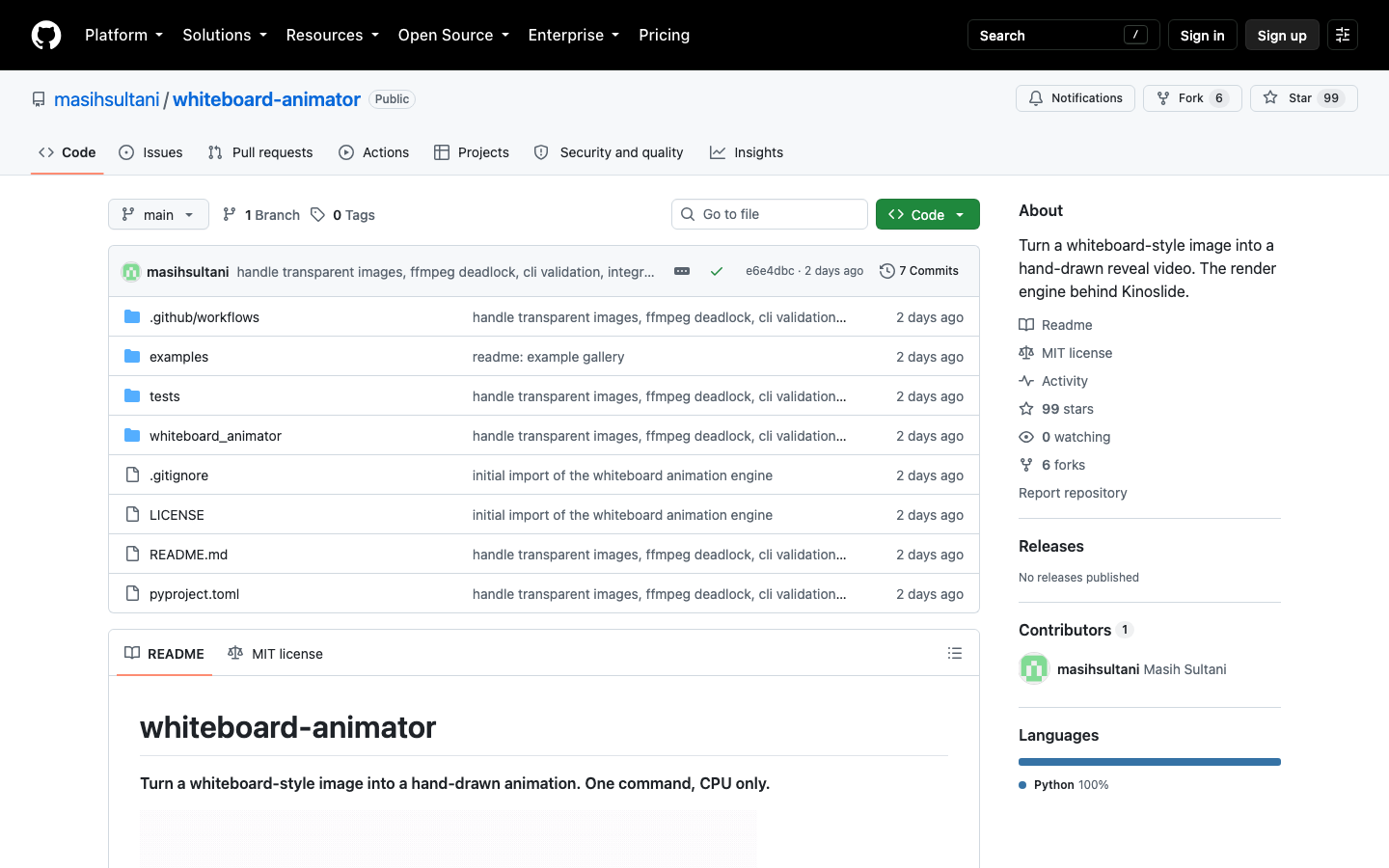
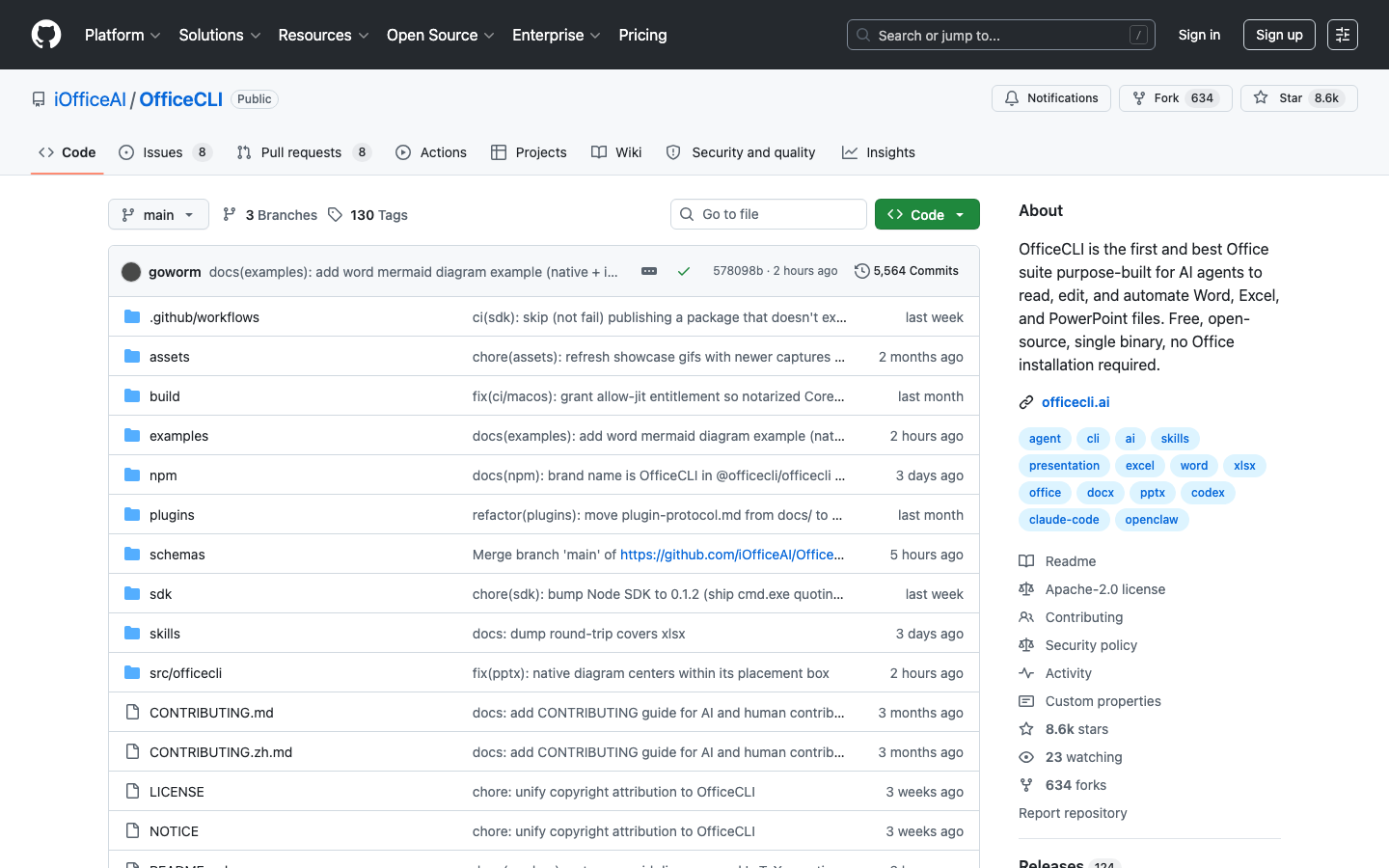
whiteboard-animator (created September 8, 2026, MIT, ~100 stars) by masihsultani is a Python package that turns a finished whiteboard-style image into a hand-drawn reveal animation with one command and no GPU: pip install whiteboard-animator, then whiteboard-animate sketch.png --duration 8 -o sketch.mp4. It is the render engine behind the Whiteboard format at Kinoslide, released open source so anyone can animate their own images. The engine finds the ink (every connected blob of non-white pixels becomes a component, with a bundled 83 MB CRAFT text-detection ONNX model marking which components are text so words are written rather than traced), orders components the way a hand would (containers before contents, shapes before labels, text in reading order), assigns time slots that scale with the square root of area, gives every pixel a reveal time (strokes follow their skeleton from a real endpoint, closed outlines get one travelling front, fills get an outline pass then an angled sweep or bristled brush strokes, line art with junctions decomposes into sequential pen paths), and streams frames to ffmpeg. Optional narration: the drawing paces itself to an audio file, with a JSON region plan for exact drawing order — or --detect-regions lets Gemini propose the plan from the image and narration text. This review covers the render pipeline, the region-plan JSON format, quality presets, the honest limitations (white-background images only, text-based pacing that does not align to spoken-word timestamps, no audio alignment), and how the engine compares with the full Kinoslide product it powers.

bankmcp Review 2026 — A Self-Hosted, Read-Only MCP Server That Lets Your AI Read Your Own Bank Accounts
Security 7/10 Review ·

bankmcp Review 2026 — A Self-Hosted, Read-Only MCP Server That Lets Your AI Read Your Own Bank Accounts

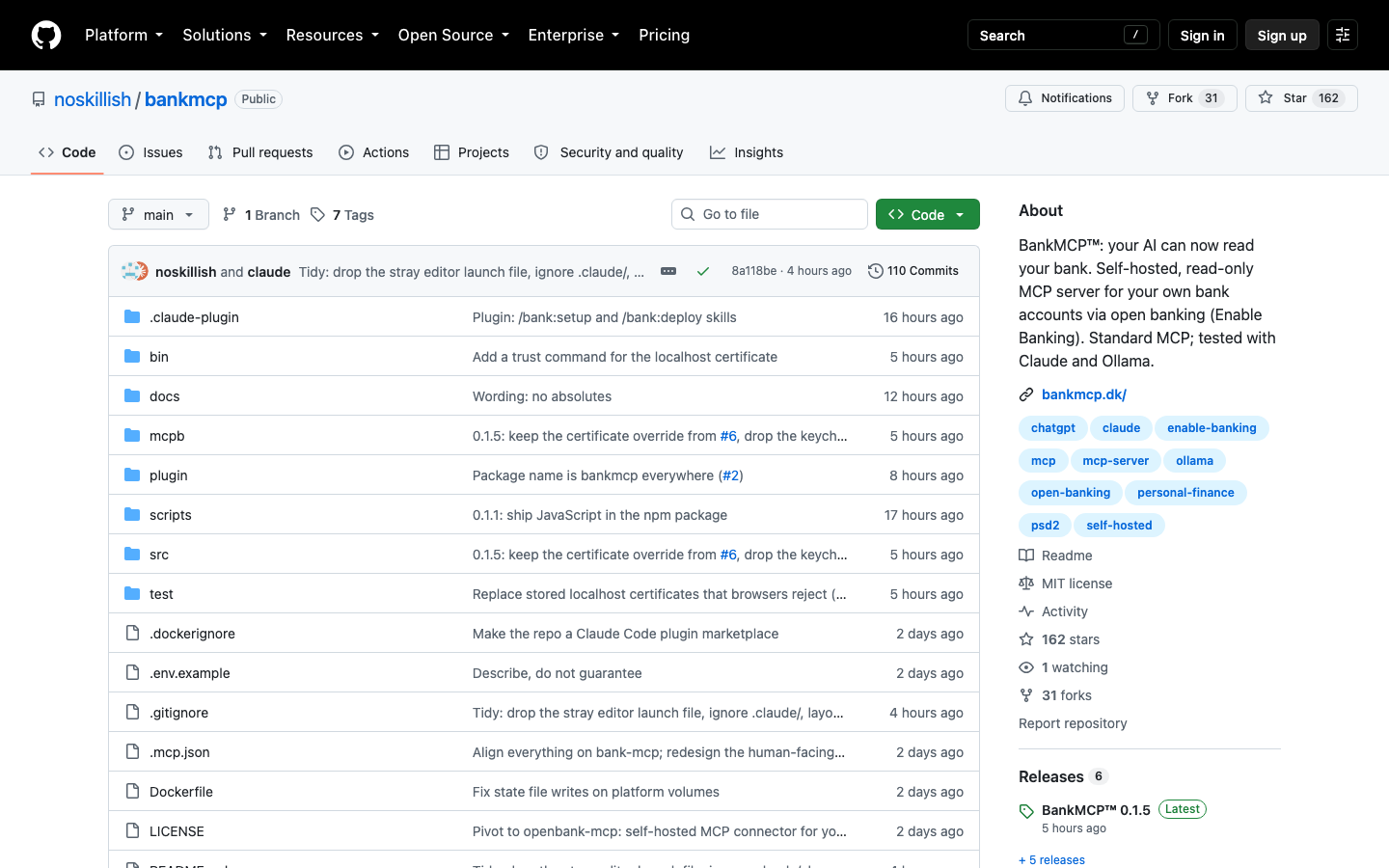
bankmcp (created September 7, 2026, MIT, 160+ stars in two days) is a small self-hosted MCP server that lets your AI assistant read your own bank accounts over the standard Model Context Protocol. It connects to your banks through Enable Banking — one PSD2 API wrapping 2,700+ European banks — and exposes them to any MCP client (Claude, Claude Code, Cursor, ChatGPT, Ollama and others) as a connector. Read-only by design: no payments, no third party holding your data, one user, and the server itself stores no balances or transactions and sends no telemetry. Ask questions like 'Has the invoice from Acme been paid?', 'What did we spend on groceries in August?' or 'Which subscriptions am I paying for, and what do they cost per year?' This review covers the architecture (your assistant talks to your server, your server talks to Enable Banking via JWT, Enable Banking talks to your bank via PSD2), the two deployment paths (on your own machine for desktop MCP clients with nothing to deploy and no password, or on a small server for claude.ai and phone access), the Enable Banking restricted production mode that allows accessing your own accounts without a commercial contract, the 180-day consent lifecycle with in-conversation renewal, the honest caveats (bank logins happen at your bank's site through Enable Banking's licensed hop, and the localhost certificate warning), and who should care about giving an AI read access to their own finances.

SuperAstra Review 2026 — A Desktop Companion That Lets GPT-6 Astra Investigate and Alter a Running SNES Game
AI Development 7.1/10 Review ·

SuperAstra Review 2026 — A Desktop Companion That Lets GPT-6 Astra Investigate and Alter a Running SNES Game

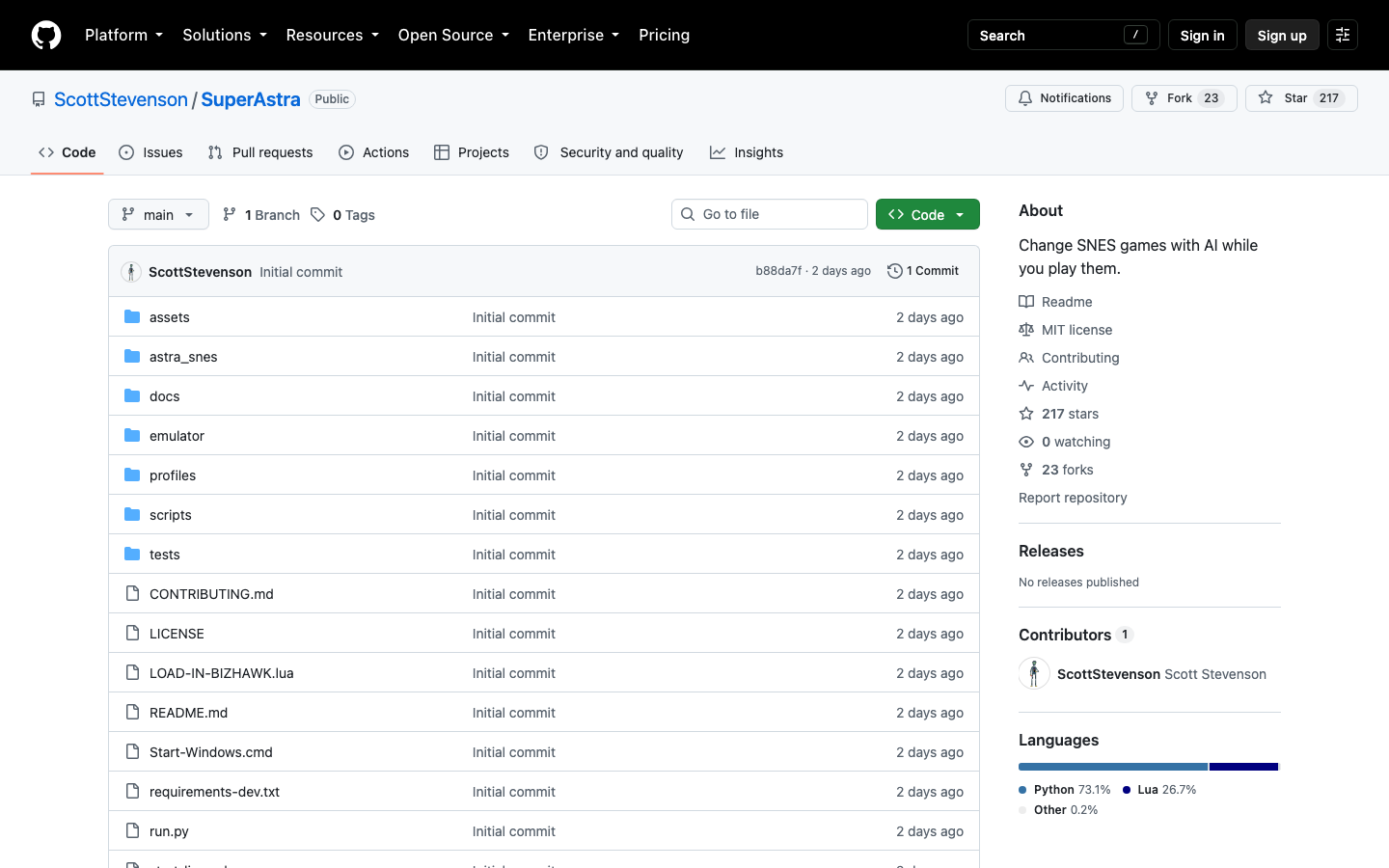
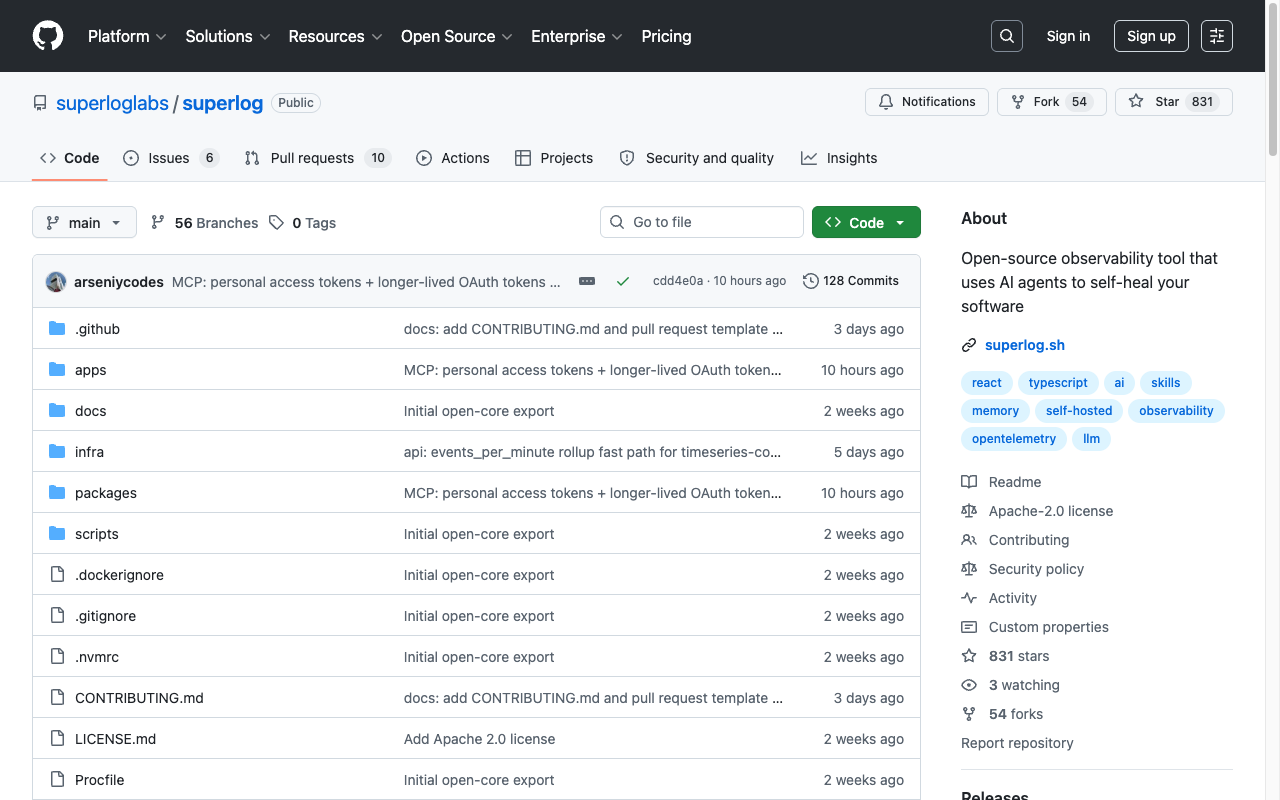
SuperAstra (created September 6, 2026, MIT, 200+ stars in three days) is a SNES-themed desktop companion by Scott Stevenson that lets OpenAI's GPT-6 Astra investigate and alter a running SNES game through natural-language prompts. Built for BizHawk with an RPG-style interface and live memory tools, it runs alongside the emulator: the agent inspects the actual game, finds memory structures (WRAM reads and scans, VRAM, OAM, CGRAM, audio RAM, cartridge RAM), reads CPU registers and disassembly where the core supports it, writes new memory routines or guarded cartridge patches, tests the result against a named checkpoint, and keeps what it learns in a per-ROM knowledge notebook. Original Super Mario World examples include 'Drop a star,' 'Put 5 Chucks on the screen' and 'Make a new effect that gives me a cape whenever I collect a coin.' This v0.3.2 prototype has passed real Snes9x game-behavior tests and automated Lua/protocol checks; the live BizHawk + Astra end-to-end path was still awaiting a final desktop test at review time. This review covers the memory investigation tools, checkpoints and controlled experiments, the undo system (eight states plus four experiment checkpoints), the 4,096-byte cartridge patch journal, the local Mario shortcuts that need no API key, the honest limitations (no ROM expansion, no exportable patch, 32 API steps per request by default), and who should care about an agent that reverse-engineers games as you play them.

dream-loop Review 2026 — The Agent Skill That Builds 3D Scenes by Dreaming a Target Screenshot and Iterating Against a Subagent Judge
AI Design 7.2/10 Review ·

dream-loop Review 2026 — The Agent Skill That Builds 3D Scenes by Dreaming a Target Screenshot and Iterating Against a Subagent Judge

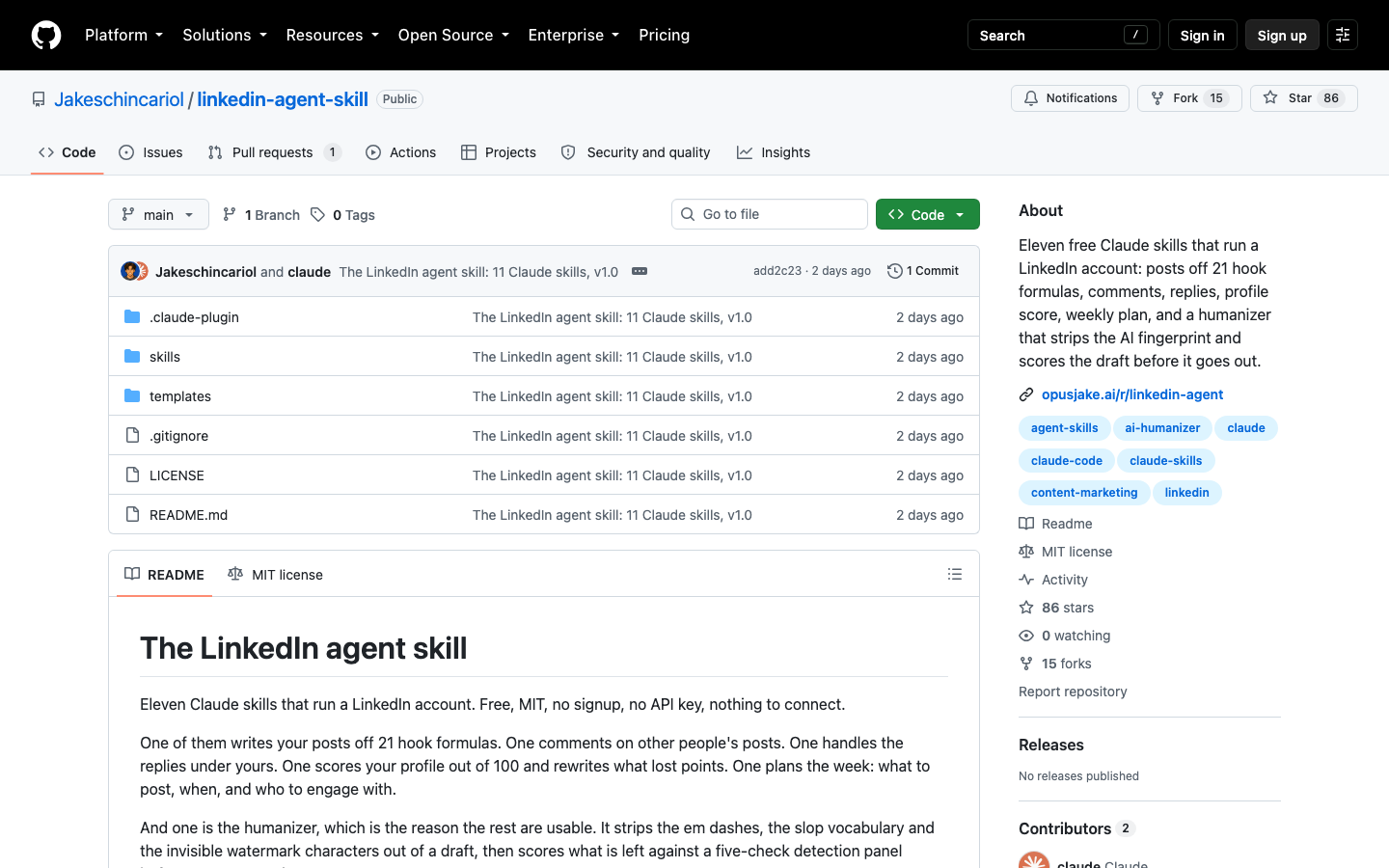
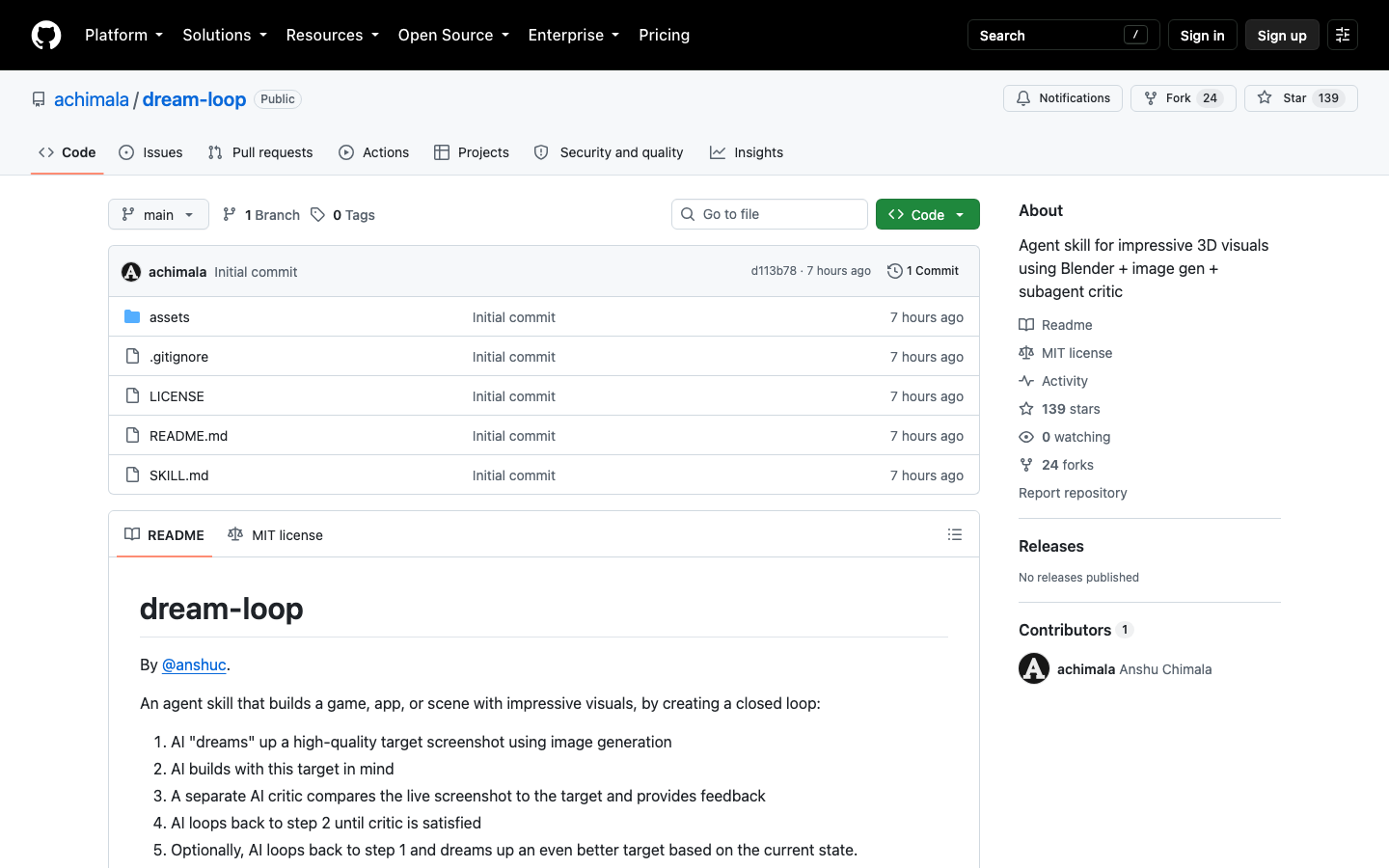
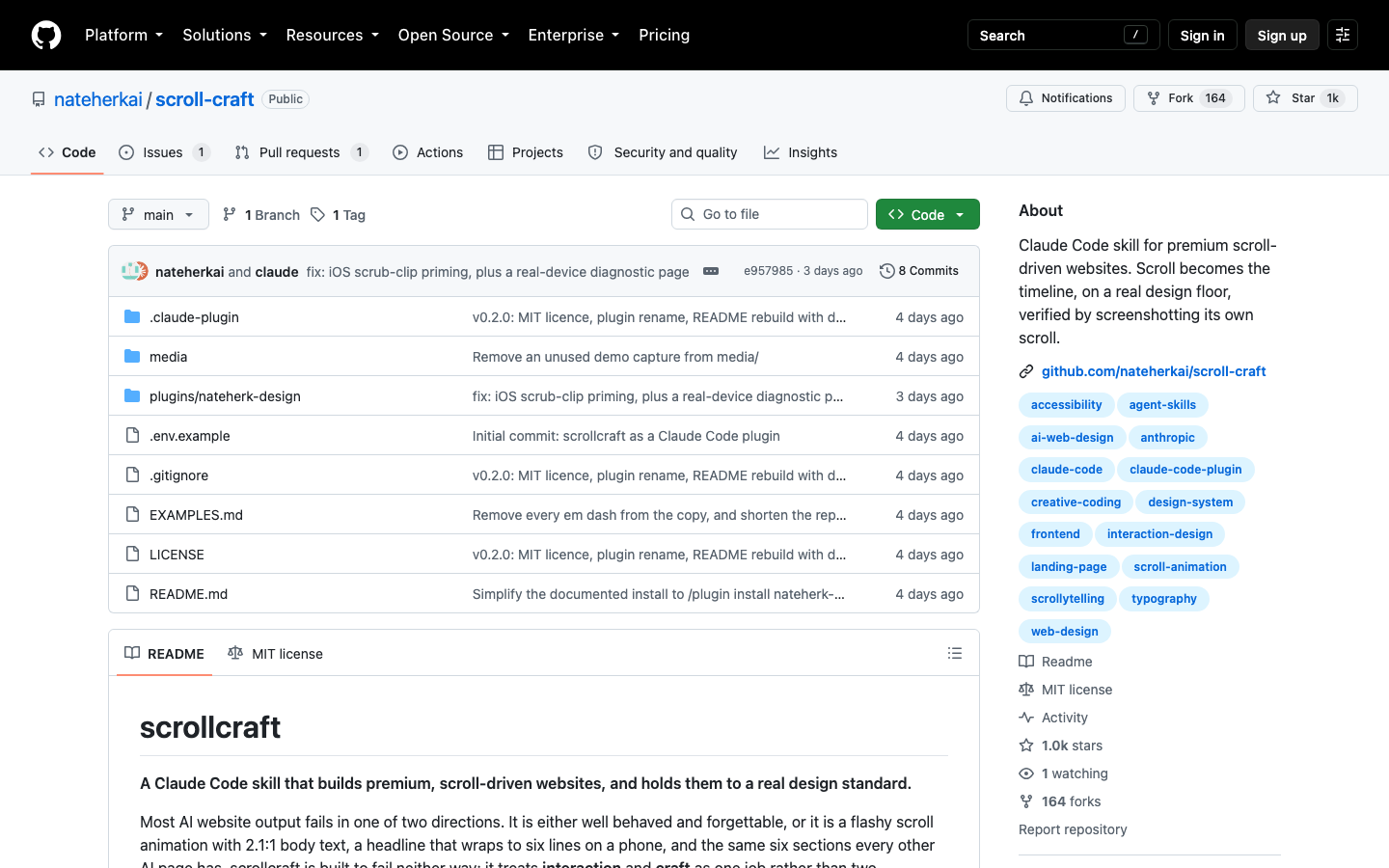
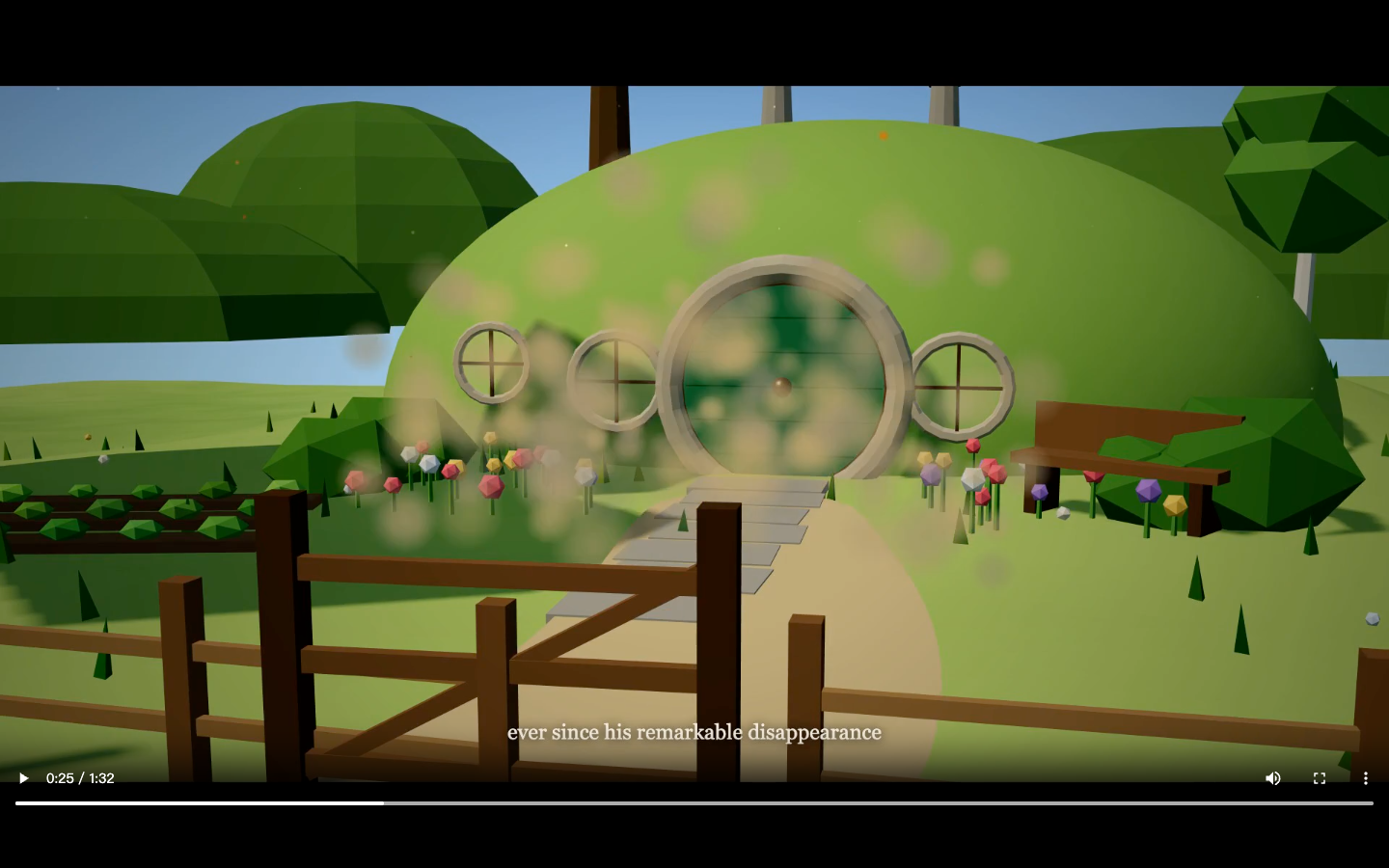
dream-loop is an MIT-licensed Agent Skill (created 2026-09-07, 130+ stars in its first day) by Anshu Chimala that turns a single prompt into a game, app or 3D scene with genuinely impressive visuals — by closing a loop most agents never close. Step 1: the agent 'dreams' a high-quality target screenshot with an image-generation model, styled as an in-engine screenshot of the ideal result. Step 2: it builds toward that target with real assets — Blender modeling preferred for 3D, image-gen textures, normal maps and skyboxes. Step 3: a separate subagent 'judge' with a clean context compares a live screenshot of the build against the concept and scores it on a gated five-tier ladder (shape 0–3, light and color 3–5, materials and surfaces 5–7, fine detail 7–9, indistinguishable 9–10), returning blocking directives with concrete magnitudes. Step 4: the builder loops until the judge scores 8+, or recognizes a stall and makes one big structural change instead of tweaking. This review covers the full loop mechanics, the judge prompt and its anti-nagging rules, the exit criteria, how dream-loop upgrades an existing product by re-rendering a live screenshot, and the honest prerequisites: a strong multimodal agent with image generation, vision and subagents — currently tested only with GPT-6 Astra in Codex.

Choruz Review 2026 — A Local-First Slack for Humans and AI Coding Agents, Where Each Agent Runs a Real CLI in Its Own Workspace
Developer Tools 7/10 Review ·

Choruz Review 2026 — A Local-First Slack for Humans and AI Coding Agents, Where Each Agent Runs a Real CLI in Its Own Workspace

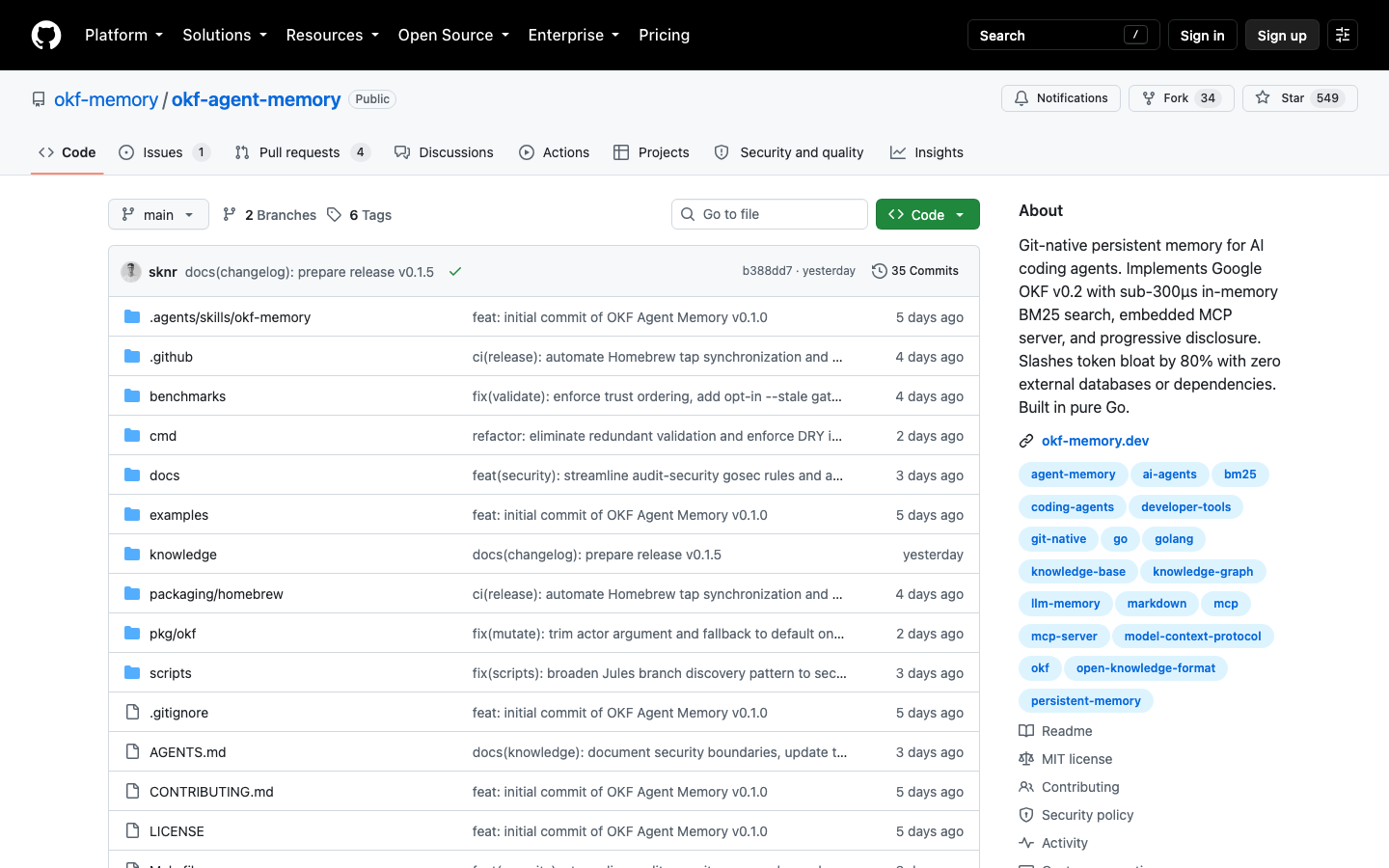
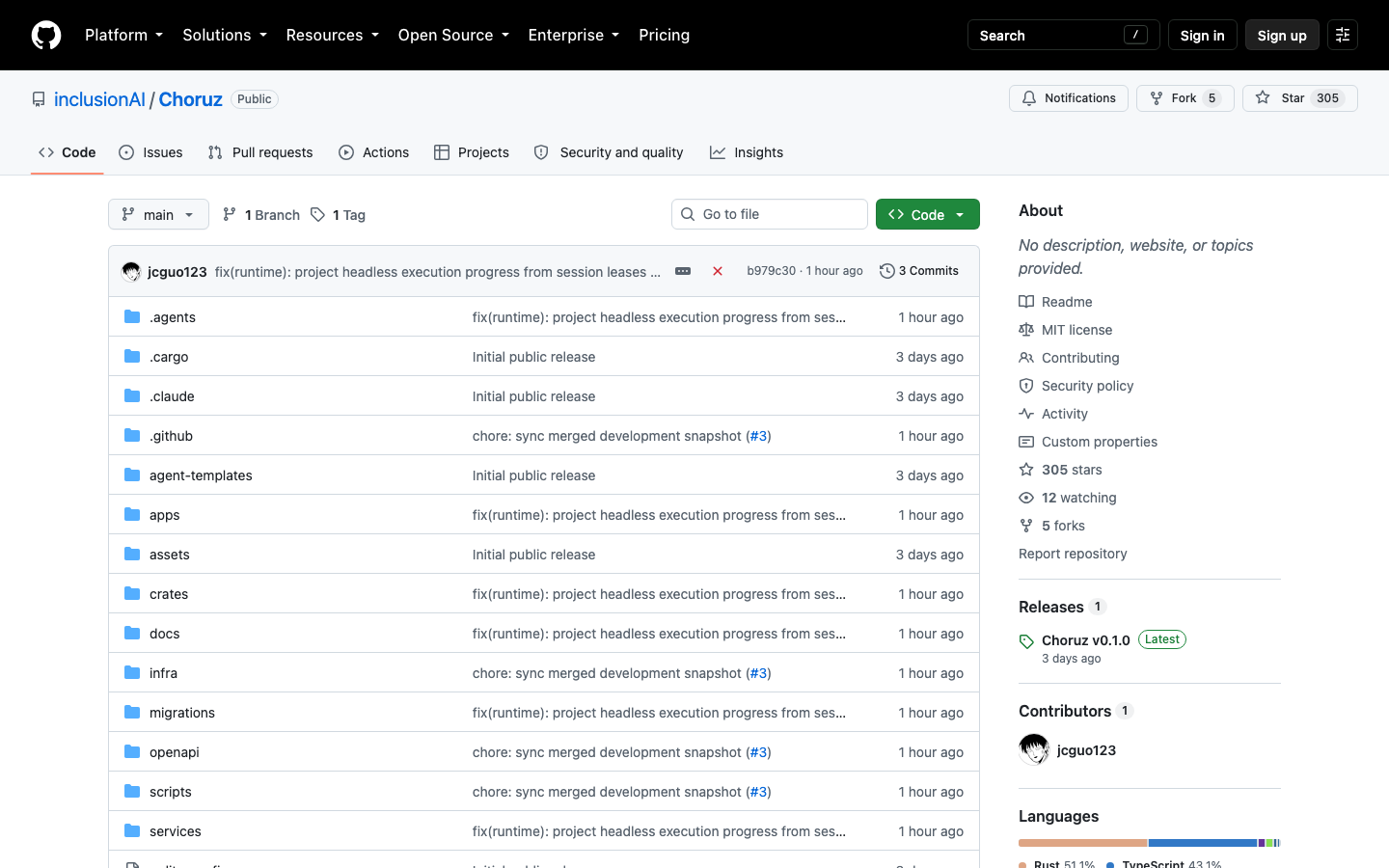
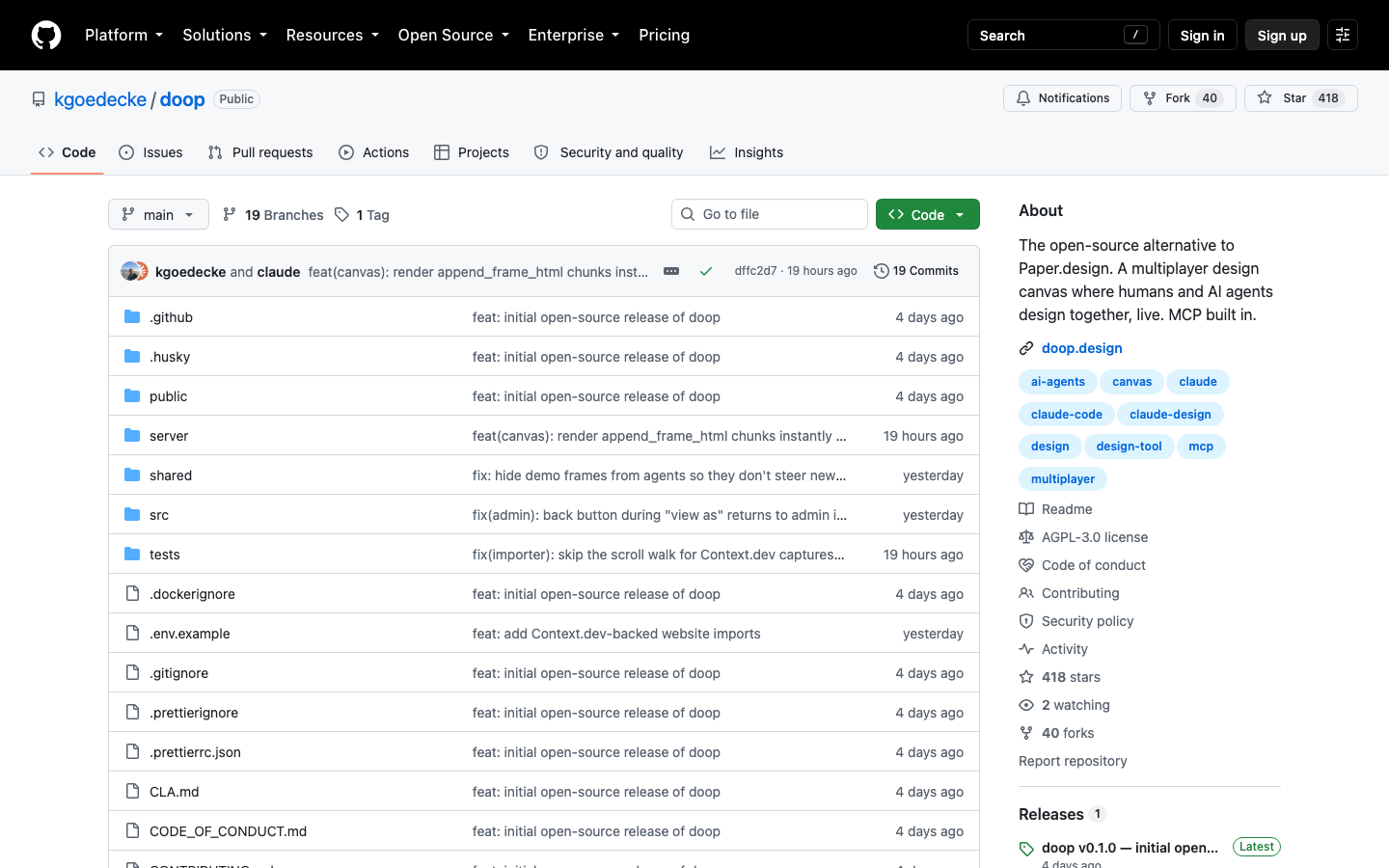
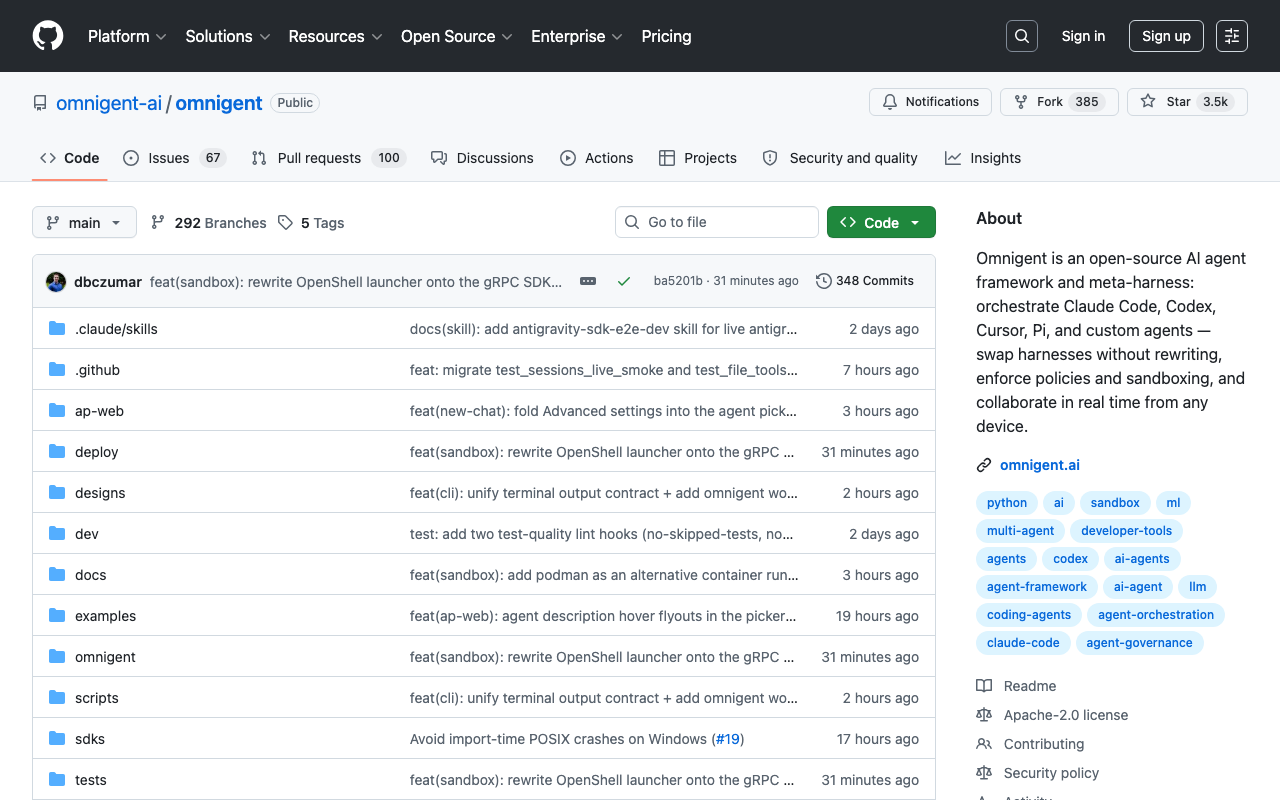
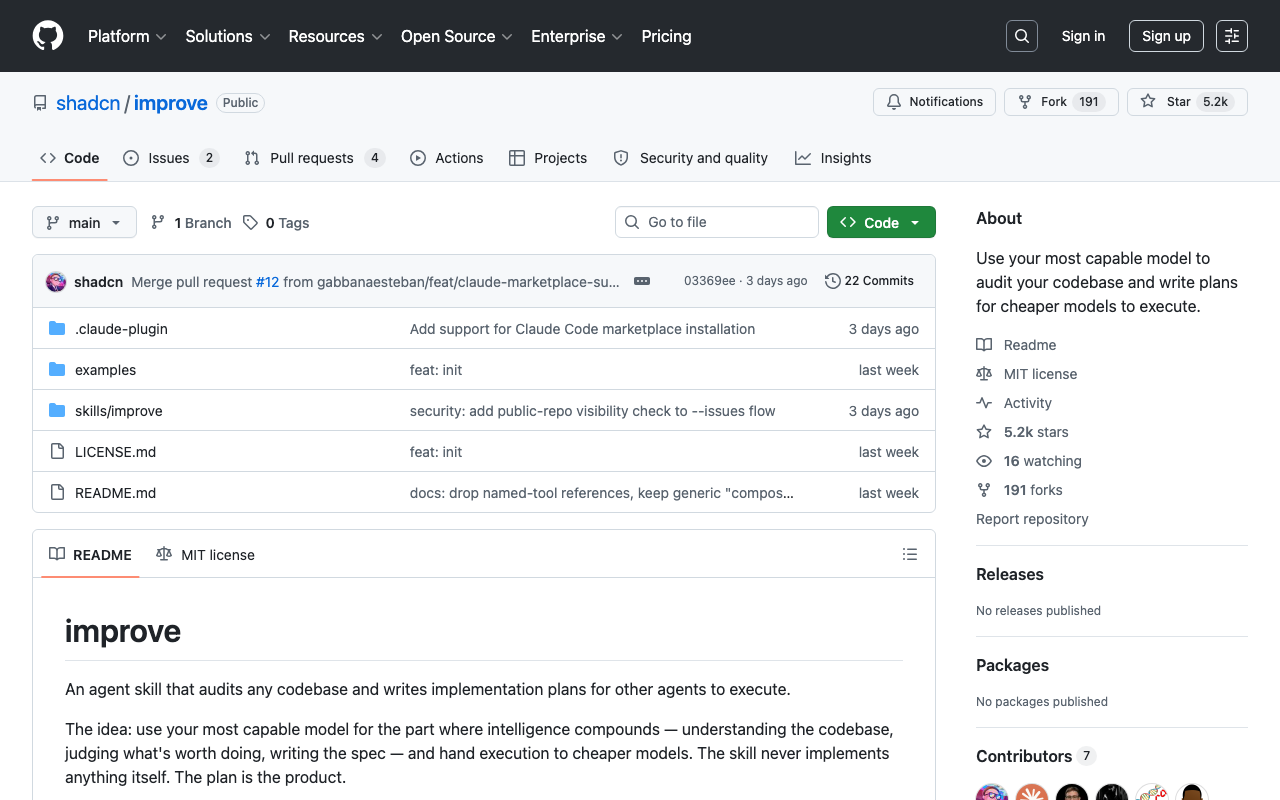
Choruz (inclusionAI, created on GitHub 2026-09-02 with 305+ stars in five days, MIT license, v0.1.0 developer preview) is a local-first collaboration space where humans and AI agents work together in a Slack-like interface — direct chats, groups, mentions, threads and channel task boards — while every agent runs a real CLI (Claude Code, Codex, Pi, Grok, OpenCode, or a webhook agent) in its own workspace directory or git worktree. Agents are not simulated in a sandbox: the platform spawns the actual terminal or headless CLI on your machine (or an SSH runtime host), talks to it through a documented agent protocol — a [choruz-incoming] envelope, a $CHORUZ_SEND helper, a Maildir-style outbox under .choruz-outbox/new/ and CLAUDE.md/AGENTS.md instruction files — and routes work between humans and agents via an event-sourced Postgres pipeline with CDC intake, leased command dispatch, idempotent writes keyed by client_msg_id and turn_id, and per-device sync cursors. Built as a Rust modular monolith (Cargo workspace crates, a choruz-api-gateway Rust service, a choruz-pipeline worker and a Next.js web client), it adds an AI Manager agent that tracks workflow state, cron-scheduled agent jobs, Slack/Telegram bridges, a kanban for channel tasks, remote-control over SSH or a Cloudflare Worker relay, and plugins. This review covers the agent protocol, the architecture, the developer-preview friction of a four-process local stack, and how Choruz compares with hosted agent workspaces and plain terminal multi-agent setups.

ffmpeg-skill Review 2026 — 21 Structured Video-Editing Tools That Teach Claude Code, Cursor and Codex to Stop Guessing About FFmpeg
Video 7.7/10 Review ·

ffmpeg-skill Review 2026 — 21 Structured Video-Editing Tools That Teach Claude Code, Cursor and Codex to Stop Guessing About FFmpeg

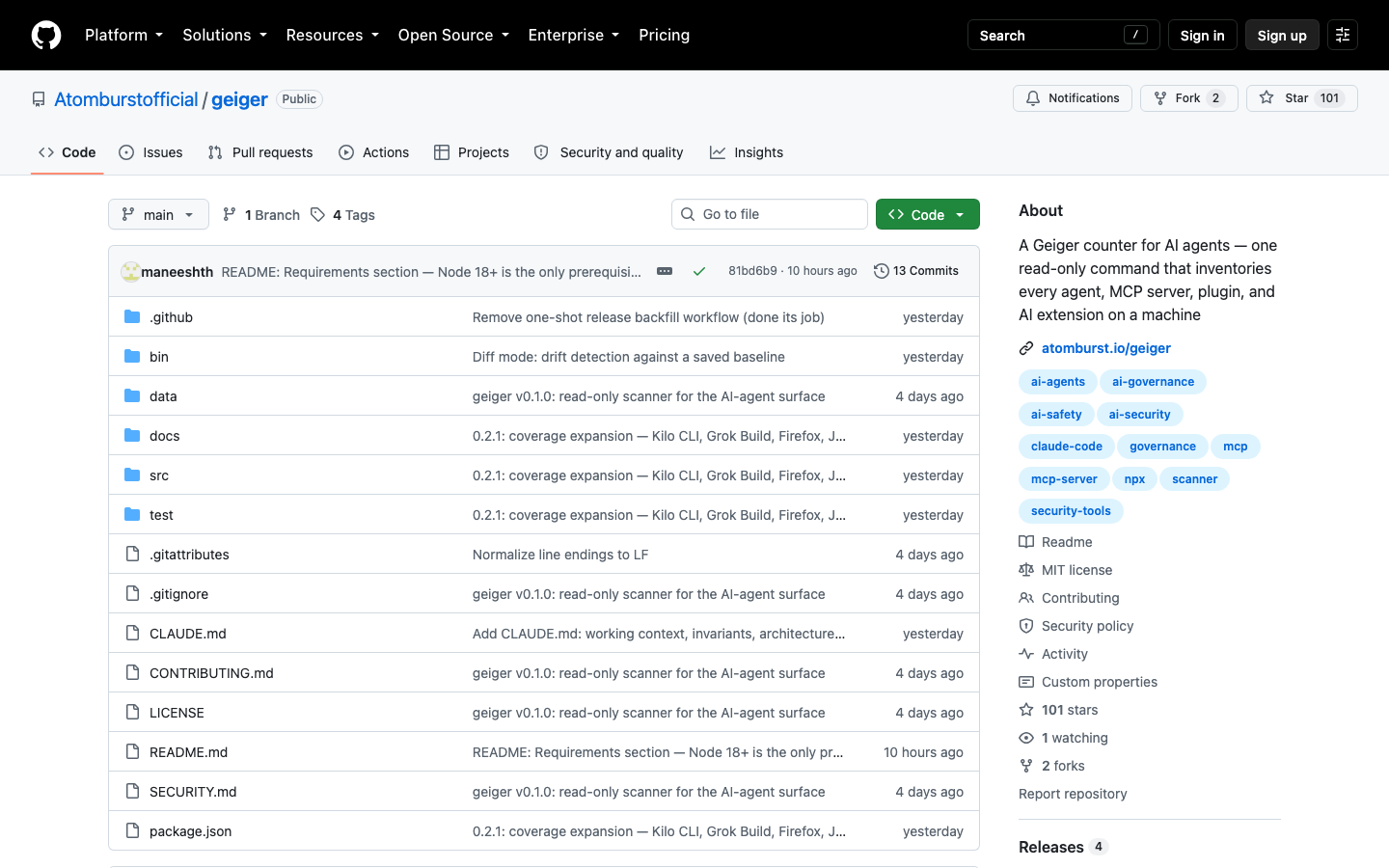
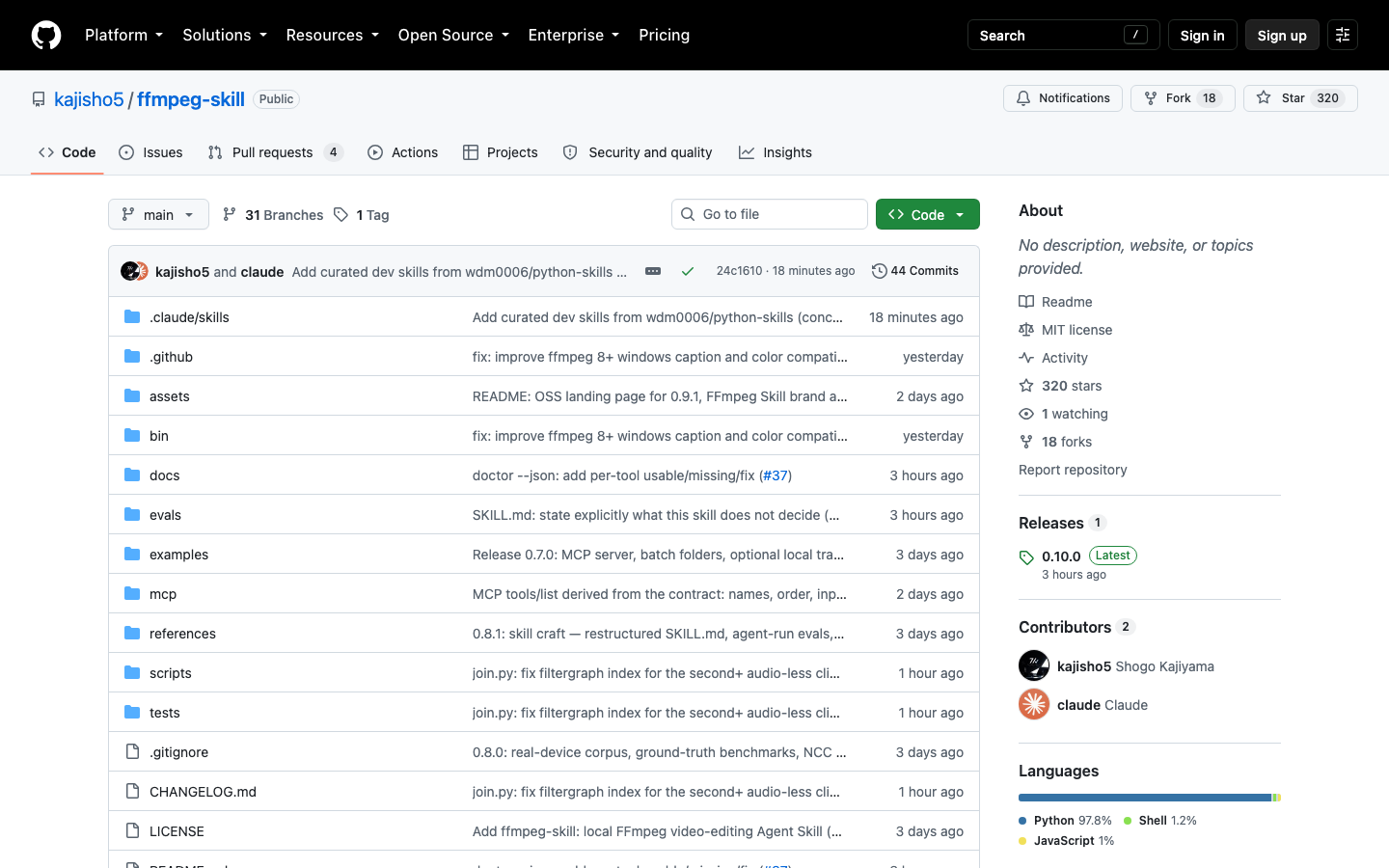
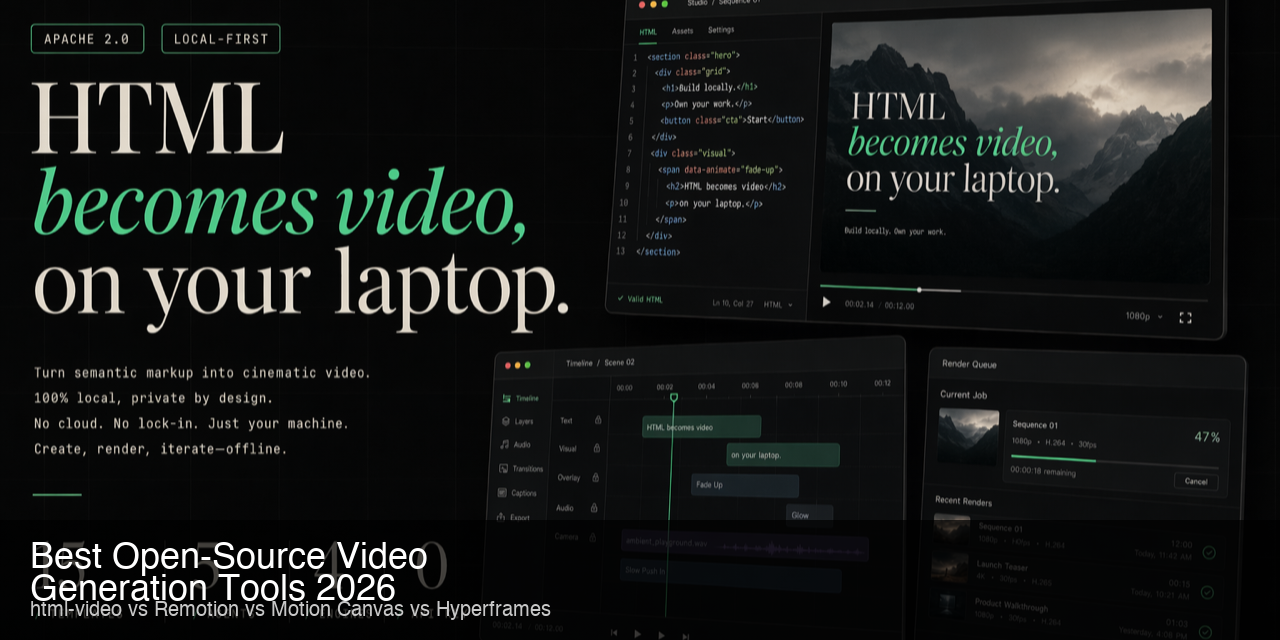
ffmpeg-skill is an open-source Agent Skill (created 2026-09-03, 320+ stars in four days, MIT license, v0.10.0) that gives Claude Code, Cursor, Codex and any agent that reads SKILL.md a real video editor: 21 structured Python tools that wrap local FFmpeg 5.0+ with a probe-first workflow, typed arguments instead of shell strings, lossless stream-copy cuts where possible, verification after execution, a machine-readable contract that is generated from the code rather than maintained beside it, and an MCP transport whose tool list is derived from that same contract so names and schemas cannot drift. Every job starts with probe.py measuring real duration, fps, resolution, colour and audio layout; cut/join/silence/fit handle editing, audio.py and loudness.py do voice clean-up and EBU R128 loudness, caption/overlay/graphics/color handle captions, lower-thirds, tone mapping and LUTs, export/check/report cover delivery presets (YouTube, Reels, podcast), and render/batch/multicam orchestrate whole projects. The project publishes real measurements: 92/92 verification steps on a 10-file real-device corpus (GoPro, DJI, iPhone Dolby Vision, HDR10, screen recordings), sync.py offset detection 40/40 within 10 ms, silence detection with zero missed gaps, scene detection at F1 0.97, and 72/72 graded agent runs. This review covers the 21 tools, the design principles that separate it from a list of FFmpeg one-liners, the FFmpeg 8 parser fix, the honest boundary where the agent's own vision must make the call, and how it compares with editing in Descript or CapCut.
Find the right AI tool for your workflow

We've tested 446+ tools so far. New reviews every week.
Start Exploring