Frontier AI Model Pricing 2026 — How to Choose the Right Model for Your Budget
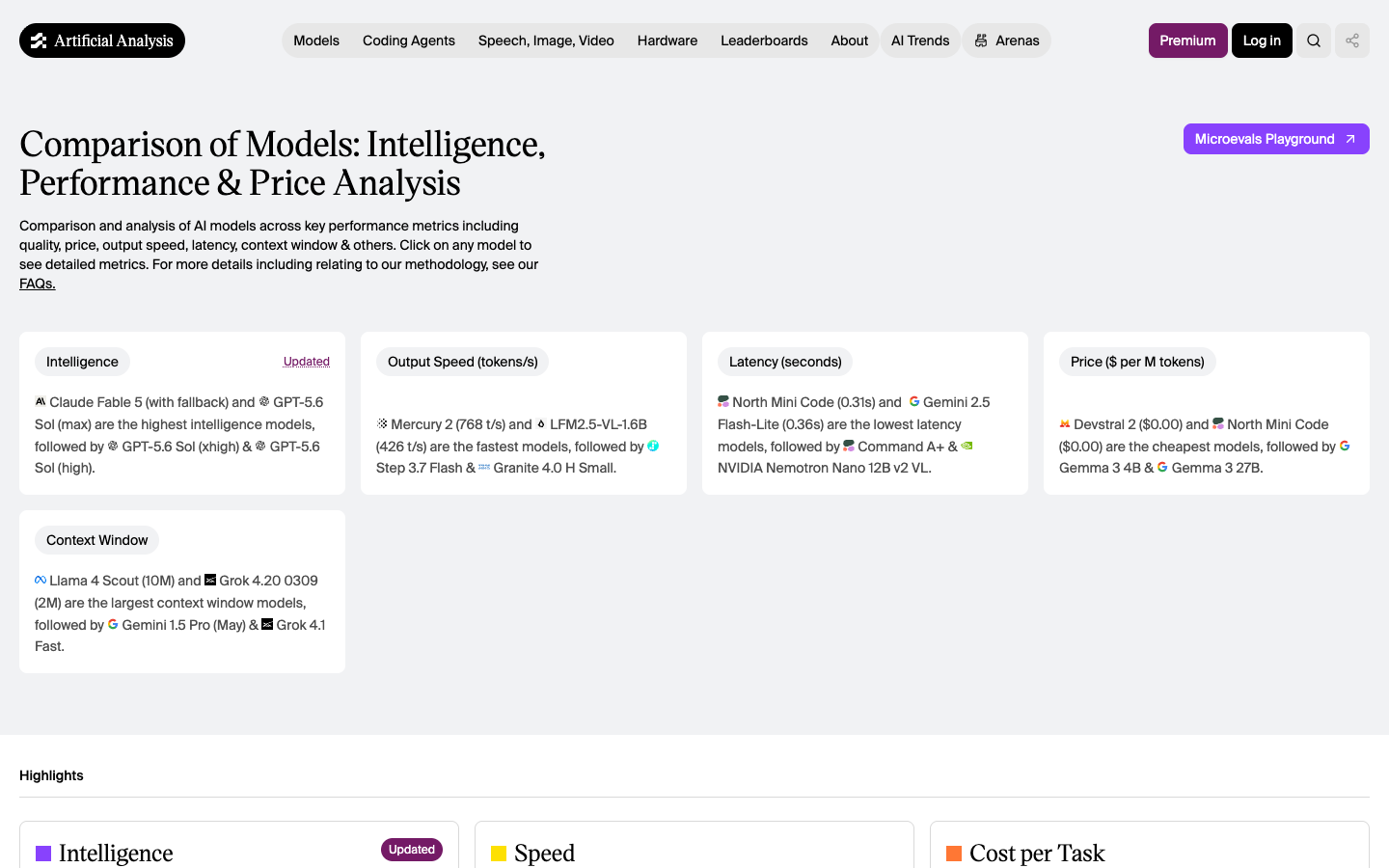
The cost of running frontier AI models is one of the biggest line items for any AI-powered product in 2026. But comparing model prices isn’t as simple as looking at the rate card.
As a groundbreaking analysis from PlayCode showed in July 2026, the same TypeScript code costs 73% more on Claude than on GPT — not because the per-token price is higher, but because Anthropic’s tokenizer produces more tokens from the same content.
This tutorial gives you a practical framework for understanding real AI model costs and making budget-optimized decisions.
Why $/Mtok Is a Misleading Number
A model’s cost is:
cost = (tokens your content becomes) × (price per token)The pricing page shows the second number and treats the first as a constant. It’s not a constant. Each vendor’s tokenizer cuts the same file into a different number of pieces, and you pay per piece.
Key finding: Anthropic’s newest tokenizer (used in Sonnet 5, Opus 4.8, and Fable 5) produces about 30% more tokens from the same code than Anthropic’s previous tokenizer. On identical files, it produces 1.36–1.73× GPT’s token count. TypeScript is the worst case at 1.73×.
Real-World Cost Comparison
Adjusted Effective Prices (July 2026)
| Model | List Price (Input/Output) | Effective Price (Input/Output) |
|---|---|---|
| GPT-5.6 Sol | $2 / $8 | $2 / $8 (baseline) |
| Claude Opus 4.8 | $5 / $25 | ~$7.50 / $37.50 |
| Claude Sonnet 5 | $3 / $15 | ~$4.50 / $22.50 |
| Gemini 2.5 Pro | $1.25 / $5 | ~$1.50 / $6 |
| Grok 4 | $2 / $8 | varies by content type |
The adjustments account for tokenizer differences using OpenAI’s o200k_base as the baseline. Claude models effectively cost 50% more than their list prices would suggest when compared to GPT.
Cost Drivers You Need to Track
-
Tokenizer efficiency — How many tokens does your content type produce per byte?
- Code (especially TypeScript/JSX): worst case for Anthropic
- Prose: relatively even across vendors
- JSON/tool schemas: moderate variation
- Chinese text: varies significantly
-
Output verbosity — Different models produce different-length responses to the same prompt
- Claude tends to be more verbose than GPT
- Configure max tokens and system prompt guidance carefully
-
Thinking/reasoning tokens — Hidden in some models
- Claude’s “thinking” tokens are billed at output rates, and can be significant
- GPT-5.6 Sol’s reasoning tokens are transparently reported
-
Caching — Can dramatically reduce costs for repeated content
- Prompt caching: 50-90% discount on cached input tokens
- Session reuse: Anthropic’s prompt caching is particularly valuable for long conversations
Step-by-Step Model Selection Framework
Step 1: Profile Your Content
Audit what kinds of content dominate your API calls:
content_profile = {
    "code_tsx": 0.35,     # TypeScript/React code
    "json_schemas": 0.25, # Tool definitions and JSON
    "prose": 0.30,        # Natural language instructions
    "chinese": 0.10       # Multi-language support
}
Content with lots of code? Anthropic’s tokenizer penalty will hit you hardest.
Step 2: Measure Token Counts Across Providers
Run a representative sample through each provider’s tokenizer:
# Anthropic
curl https://api.anthropic.com/v1/messages/count_tokens \
  -H "x-api-key: $ANTHROPIC_API_KEY" \
  -H "anthropic-version: 2026-01-01" \
  -d '{"model": "claude-sonnet-5-20260601", "messages": [{"role": "user", "content": "..."}]}'

# OpenAI (local with tiktoken)
python -c "import tiktoken; enc = tiktoken.get_encoding('o200k_base'); print(len(enc.encode('your content here')))"
Step 3: Calculate Effective Cost
def effective_cost(provider, content, input_price, output_price, output_ratio=0.3):
    token_count = count_tokens(provider, content)
    adjusted_input = input_price * (token_count / 1_000_000)
    estimated_output = token_count * output_ratio
    adjusted_output = output_price * (estimated_output / 1_000_000)
    return adjusted_input + adjusted_output
Step 4: Factor in Caching
Prompt caching changes the math significantly. If you have high cache hit rates (common with system prompts, tool definitions, and conversation preambles):
- Anthropic: 90% discount on cached input → makes their models much more competitive
- OpenAI: 50% discount on cached input
- Gemini: Context caching available but pricing differs
Step 5: Run a Real-World Test
Before committing, run 100 real queries through each candidate model and measure:
- Total tokens billed (input + output + cached)
- Total cost
- Quality metrics (task completion, accuracy)
- Latency
Model Selection by Use Case
Budget-Conscious General Purpose
| Model | Effective Cost | Best For |
|---|---|---|
| GPT-5.1 Flash | ~$0.50/Mtok | High-volume, simple tasks |
| Gemini 2.0 Flash | ~$0.30/Mtok | Cheapest viable option |
| Claude Haiku 5 | ~$0.80/Mtok | Code-heavy, fast responses |
Premium Reasoning
| Model | Effective Cost | Best For |
|---|---|---|
| GPT-5.6 Sol | ~$8/Mtok | Best overall value for reasoning |
| Claude Opus 4.8 | ~$37.50/Mtok | Best for complex analysis |
| Gemini 2.5 Pro | ~$6/Mtok | Best multimodal reasoning |
Code Generation
For code-heavy workloads, the tokenizer difference matters most. GPT models have a clear cost advantage for TypeScript/JSX generation.
Caching Strategy
Prompt caching is the single most impactful cost optimization. Best practices:
- Cache system prompts — Always. Structure your system prompts to maximize reuse.
- Cache tool definitions — They rarely change between calls.
- Use conversation IDs — Both Anthropic and OpenAI support session-level caching.
- Batch requests — Combine independent tasks into a single prompt.
Example savings:
- Without caching: $100/day on Claude Opus 4.8
- With 80% cache hit rate: ~$28/day (72% savings)
Summary
| Lesson | Impact |
|---|---|
| Tokenizers differ by up to 73% | Same content, very different bills |
| Caching can reduce costs by 70%+ | Biggest lever you can pull |
| Effective prices ≠ list prices | Anthropic effectively costs ~50% more than list |
| Measure with your own content | Generic benchmarks don’t predict your costs |
| Mix models for cost optimization | Use cheaper models for simple tasks, premium for complex |
Bottom Line
The headline takeaway: don’t compare $/Mtok across providers. Measure token counts with your own content, factor in caching, and calculate effective costs. A model that looks cheap on the rate card can be 73% more expensive in practice — and vice versa.
For most production workloads in mid-2026, a hybrid strategy works best: GPT-5.6 Sol for heavy reasoning, Sonnet 5 for code tasks (with aggressive caching), and Gemini Flash for high-volume, low-complexity calls.