Veo vs Runway vs Sora — AI Video Generators Deep Comparison (2026)
Veo vs Runway vs Sora — AI Video Generators Deep Comparison (2026)
The AI video generation landscape in 2026 has seen dramatic shifts. OpenAI’s Sora — once the most hyped AI video product of 2024 — was discontinued on April 26, 2026, after failing to achieve sustainable product-market fit. Meanwhile, Google DeepMind’s Veo 3.1 and Runway’s Gen-4.5 have emerged as the two dominant forces, each taking very different approaches to the same problem.
We evaluated both platforms extensively and looked back at Sora’s brief but influential run to understand what worked, what didn’t, and where AI video generation is headed.
Quick Verdict
Veo 3.1 delivers the best overall video quality with native audio generation, camera controls, character consistency, and 4K output — but it’s primarily accessible through Google’s ecosystem (Gemini, Google Flow). Runway offers the best value and flexibility, providing access to multiple models (Gen-4.5, Kling 3.0, Veo 3.1) in one platform with transparent pricing from $12/month. The market is now a two-horse race after Sora’s exit.
A Major Change: Sora’s Discontinuation
The biggest news in AI video in 2026 is Sora’s discontinuation. OpenAI officially shut down Sora’s web and app experiences on April 26, 2026. The Sora API will follow on September 24, 2026. Users can still export their data through sora.chatgpt.com/sunset.
What went wrong? Several factors contributed:
- Limited availability: Sora only launched publicly in late 2025, far behind Runway’s years-long head start
- No clear pricing model: Sora relied on ChatGPT credits rather than a dedicated video pricing tier
- Quality parity gap: By the time Sora launched widely, both Veo and Runway had matched or exceeded its quality
- Narrow feature set: Sora lacked the audio generation, camera controls, and editing tools that competitors offered
This means the comparison is now primarily between Veo and Runway.
At a Glance: How They Compare
| Feature | Veo 3.1 (Google DeepMind) | Runway Gen-4.5 | Sora (Discontinued) |
|---|---|---|---|
| Latest Model | Veo 3.1 | Gen-4.5 | N/A (shut down April 2026) |
| Text-to-Video | ✅ Excellent | ✅ Excellent | ✅ Good |
| Image-to-Video | ✅ Excellent | ✅ Excellent | ✅ Good |
| Native Audio | ✅ Yes | ✅ Yes (limited) | ❌ No |
| 4K Output | ✅ Yes | ✅ Yes (paid) | ❌ No |
| Camera Controls | ✅ Extensive | ✅ Basic | ❌ No |
| Character Consistency | ✅ Yes | ✅ Yes | ❌ Limited |
| Scene Extension | ✅ Yes | ✅ Yes | ❌ No |
| Object Add/Remove | ✅ Yes | ❌ No | ❌ No |
| Free Tier | ✅ Via Gemini | ✅ 125 credits | N/A |
| Starting Price | Gemini subscription | $12/mo (annual) | N/A |
Veo 3.1: Google DeepMind’s Cinematic Powerhouse
Veo 3.1 is currently the most capable AI video generation model available. Released by Google DeepMind, it’s the only platform that generates native audio alongside video — a game-changer for filmmakers and content creators who previously had to add sound in post-production.
Key Capabilities
Native Audio Generation: Veo 3.1 can generate sound effects, ambient noise, and even dialogue that syncs with generated video. This is a significant advantage — no other platform offers true native audio generation.
Camera Controls: Precisely control framing and movement — zoom in, move back, pan, dolly. These controls give filmmakers granular shot composition without needing a separate editing step.
Character Consistency: Using reference images, Veo 3.1 maintains character appearance across different scenes — a critical feature for narrative storytelling.
Scene Extension: Extend clips into longer videos using the last frame as a starting point. Visual and audio consistency is maintained throughout.
Outpainting & Object Manipulation: Expand beyond the original frame, add new objects, or remove unwanted elements — all with natural shadow and scale considerations.
Access Options
Veo 3.1 is available through multiple Google surfaces:
- Gemini: Try directly with a Gemini subscription
- Google Flow: A dedicated AI filmmaking tool with advanced controls
- Google AI Studio: For developers building with the Gemini API
- Google Vids: AI-powered video creation for work
Veo 3.1 benchmarks show it leading in text-to-video overall preference on the MovieGenBench dataset, outperforming competitors in human evaluation. It also leads in image-to-video quality for scenarios that allow realistic human imagery.
Runway: The Multi-Model Platform
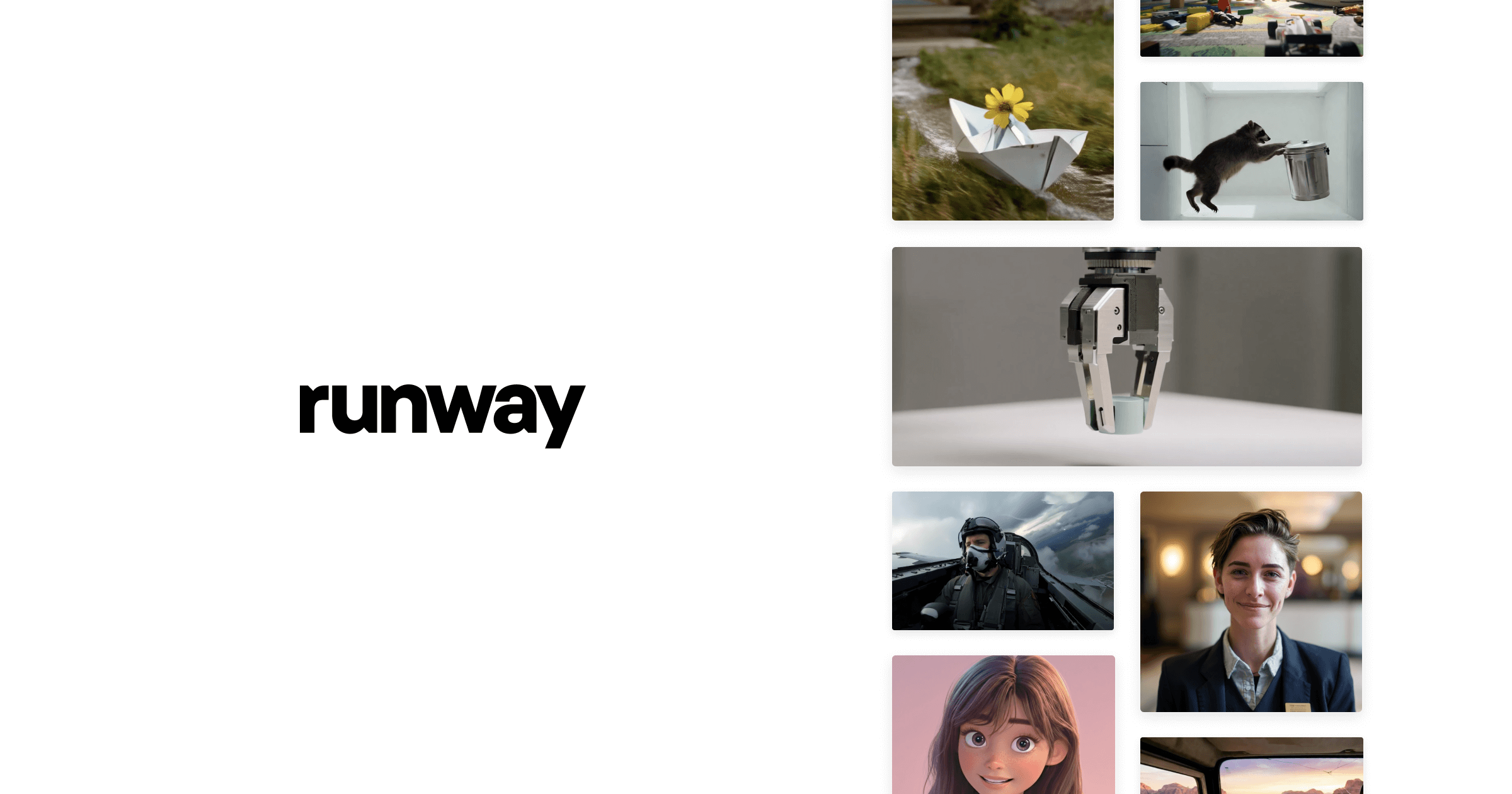
Runway takes a fundamentally different approach. Instead of offering one model, Runway’s platform now provides access to multiple leading models — Gen-4.5, Kling 3.0, Seedance 2.0, Nano Banana Pro, and even Veo 3.1 itself.
Gen-4.5: Runway’s Flagship
Runway’s own Gen-4.5 model delivers excellent text-to-video and image-to-video quality, with 4K upscaling available on paid plans. Key features include:
- Gen-4 Turbo: Faster generation for shorter, punchier clips
- Generative Image: High-quality still image generation
- Generative Audio: Text-to-speech and audio apps
- Lip Sync: Custom voice creation on Pro and above
- Characters: Consistent character generation across scenes
Pricing Breakdown
| Plan | Monthly Cost (Annual) | Credits | Key Benefit |
|---|---|---|---|
| Free | $0 | 125 one-time | Explore all models with watermark |
| Standard | $12/mo | 625/mo | No watermark, 4K upscaling |
| Pro | $28/mo | 2250/mo | Custom voices, 500GB storage |
| Max | $76/mo | 9500/mo | Highest volume, credit rollover |
Runway’s approach to pricing is credit-based: 625 credits monthly on Standard gives you approximately 52 seconds of Gen-4.5 video or 104 seconds of Gen-4 Turbo at standard resolution.
Multi-Model Strategy
What makes Runway particularly interesting in 2026 is its decision to host competitors’ models. Users can choose between Gen-4.5, Kling 3.0, Seedance 2.0, and Veo 3.1 within the same interface — essentially becoming a marketplace for AI video generation. This gives Runway users the best quality regardless of which model performs best for a particular task.
Sora: A Cautionary Tale
OpenAI’s Sora was arguably the most anticipated AI product of 2024, with early demos showing stunning video quality that seemed impossible at the time. However, by the time Sora became widely available in late 2025, the competitive landscape had shifted.
What Sora Did Well
Sora’s strength was text-to-video generation with impressive physics understanding. Early demo footage showed it could model complex interactions between objects, lighting, and environments in ways no other tool could match at the time.
Where It Fell Short
Sora’s limitations became apparent as competitors caught up:
- No audio generation: A major omission as Veo 3.1 proved that native audio was possible
- No camera controls: Cannot specify shot composition or movement
- Character inconsistency: Characters often changed appearance between scenes
- Limited editing tools: No scene extension, outpainting, or object manipulation
- Credit complexity: Tied to ChatGPT credits rather than a dedicated pricing model
Lessons from Sora’s Shutdown
Sora’s discontinuation carries important lessons for the AI industry:
- First-mover advantage is fleeting: Being first to demonstrate doesn’t guarantee market leadership
- Platform matters more than model: The tools and controls around the model are as important as the model itself
- Pricing clarity wins: Users prefer transparent, predictable pricing
- Integration depth: Tightly integrating into a broader ecosystem (like Google’s Gemini) creates stickiness that standalone products can’t match
Pricing Comparison
| Platform | Free Tier | Entry Paid | Mid Tier | Pro Tier |
|---|---|---|---|---|
| Veo 3.1 | Via Gemini Free | Gemini Advanced ($20/mo) | Google Flow | Enterprise |
| Runway | 125 credits (one-time) | $12/mo | $28/mo | $76/mo |
| Sora | N/A | N/A | N/A | N/A |
Veo 3.1’s pricing is effectively bundled into Google’s Gemini subscription — $20/month for Gemini Advanced gives you access to Veo, Gemini 2.5 Pro, and Google’s full AI suite. This bundling strategy makes it an attractive option for users already in the Google ecosystem.
User Experience
Veo 3.1 via Gemini: The simplest entry point but the least control. Gemini’s chat interface handles video generation requests conversationally but doesn’t expose Veo’s full creative controls. Google Flow provides the professional toolset but requires a separate sign-up.
Runway: The most polished standalone tool. Its browser-based interface includes a timeline editor, model selector, and all creative tools in one workspace. The free tier is generous enough for evaluation, and upgrading is frictionless.
Sora (historical): Its interface was clean but limited — essentially a text prompt box with generation parameters. The absence of editing tools meant every video was a “one-shot” generation with no post-processing.
Performance Benchmarks
Based on Veo 3.1’s published benchmarks and independent testing:
| Metric | Veo 3.1 | Runway Gen-4.5 | Sora 2 (historical) |
|---|---|---|---|
| T2V Overall Preference | #1 | #2 | #3 |
| Image-to-Video Quality | #1 | #2 | N/A (limited) |
| Audio Generation | ✅ Native | ❌ (post-process) | ❌ |
| 4K Resolution | ✅ 4K | ✅ 4K | ❌ 1080p max |
| Generation Speed | 30-60s per clip | 15-45s per clip | 45-120s per clip |
Pros & Cons
Veo 3.1
Pros:
- Best overall video quality with native audio generation
- Extensive creative controls (camera, character, motion, outpainting)
- Leading benchmarks across all metrics
- Deep integration with Google ecosystem
- SynthID watermarking for content provenance
Cons:
- No standalone pricing — requires Gemini subscription
- Full controls only available through Google Flow (separate tool)
- Limited direct API access for developers
Runway
Pros:
- Best value with generous free tier and transparent pricing
- Multi-model platform — use Veo, Kling, or Gen-4.5 in one place
- Polished standalone editing experience
- Credit system offers predictable costs
- Regular model updates and new model additions
Cons:
- Credit-based system makes per-project costs variable
- Free tier credits are one-time only
- Audio generation is less developed than Veo
Best For
Professional filmmakers and storytellers: Veo 3.1 via Google Flow offers the most cinematic controls and best overall quality. The native audio generation eliminates a major post-production step.
Content creators and marketers on a budget: Runway’s Standard plan at $12/month provides excellent quality for social media content, marketing videos, and quick turnarounds.
Teams needing model flexibility: Runway’s multi-model platform lets you choose the best tool for each specific project, from realistic video to stylized animation.
FAQ
Q: Is Sora coming back? A: No. OpenAI has confirmed Sora’s discontinuation with no plans to revive it. The API will be fully shut down by September 24, 2026.
Q: Which platform has the best free tier? A: Runway offers 125 one-time free credits, which is enough to evaluate all models. Veo is available through Gemini’s free tier but with limited generations.
Q: Can I use Veo without Google Gemini? A: Yes — through Google Flow (web app), Google AI Studio (for developers), and the Gemini API. But all routes require some form of Google account.
Q: What’s the best platform for faceless YouTube channels? A: Runway is more practical for volume content creation with its credit system and editing tools. Veo 3.1 offers better quality per clip but is harder to use at scale.
Verdict
The AI video generation market has crystallized into two real options after Sora’s departure. Veo 3.1 leads on pure quality and creative controls — it’s the best choice if you want cinematic results and are already in the Google ecosystem. Runway wins on value, flexibility, and workflow integration — it’s the practical choice for most content creators and teams.
Both platforms have eliminated the “uncanny valley” problem that plagued early AI video. Videos from either platform are now usable in professional contexts with proper direction. The remaining gap is in long-form generation (over 60 seconds) and narrative consistency — areas both platforms continue to improve rapidly.